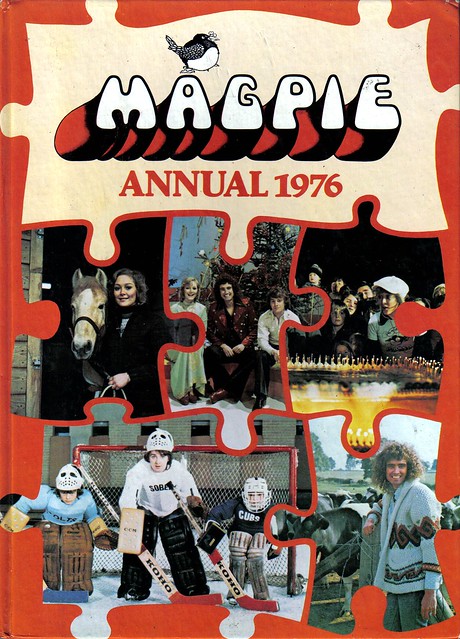
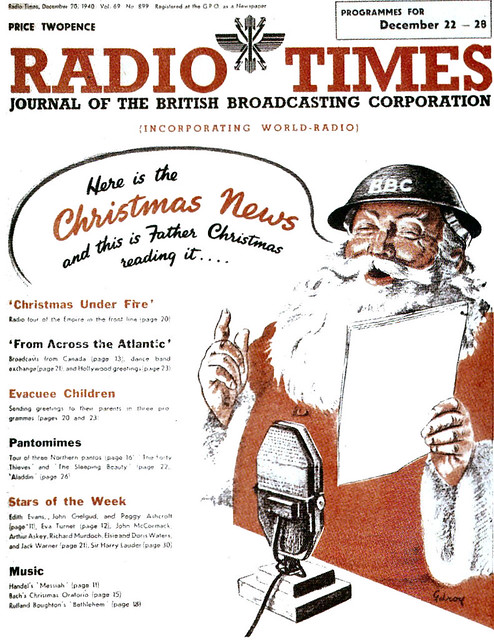
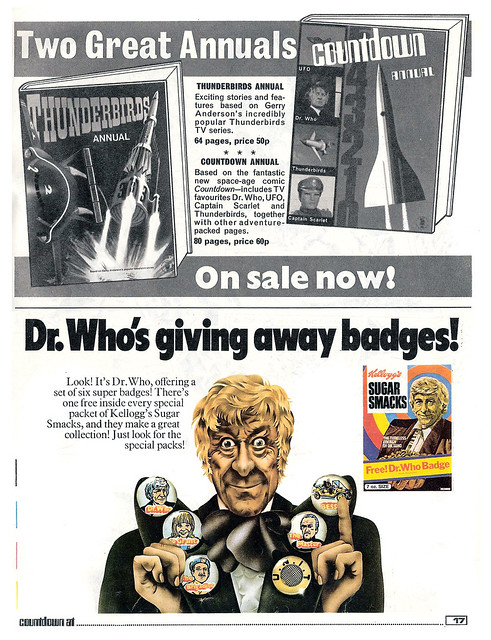
When I was a kid, TV Annuals were just as big business as toys and games. Here are some pages from the Magpie TV Annual 1976.
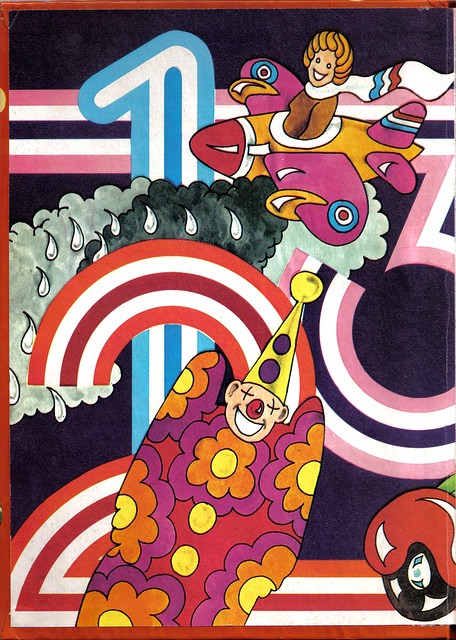
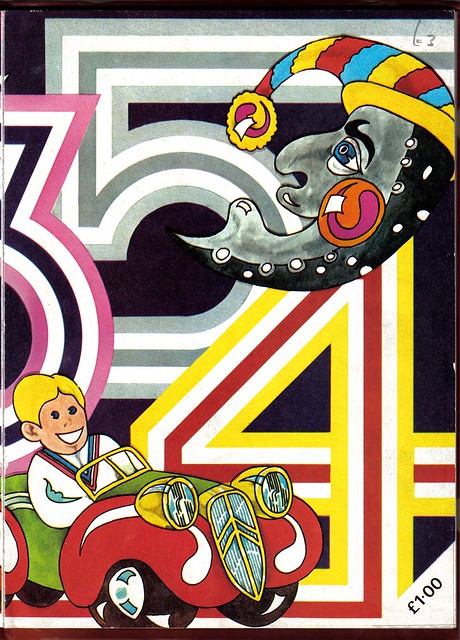
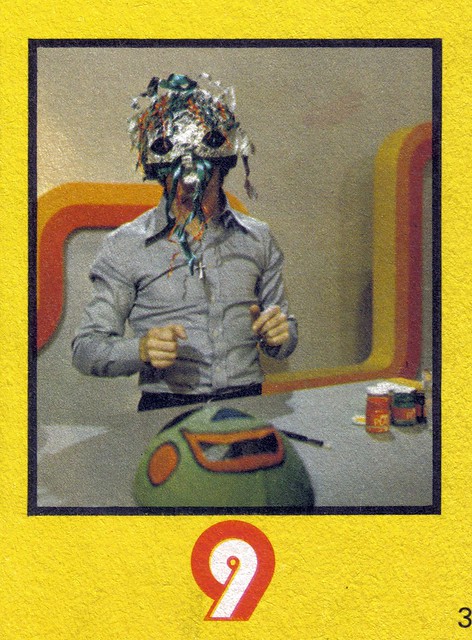
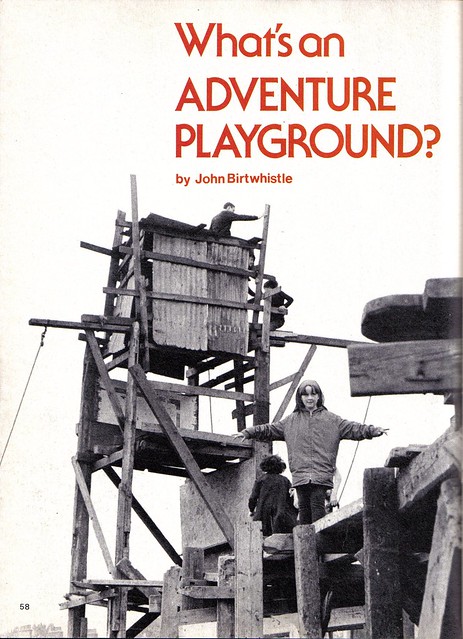
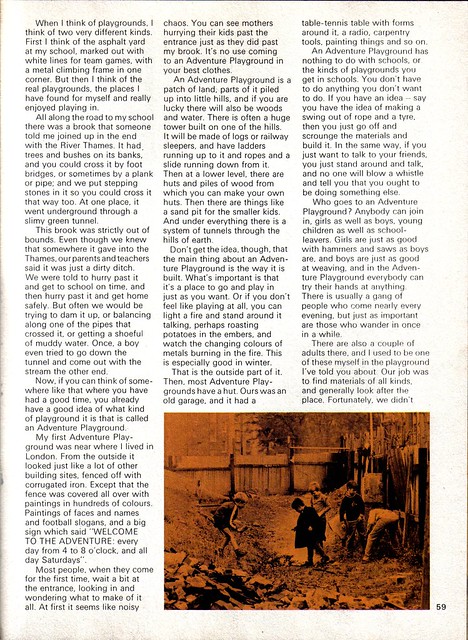
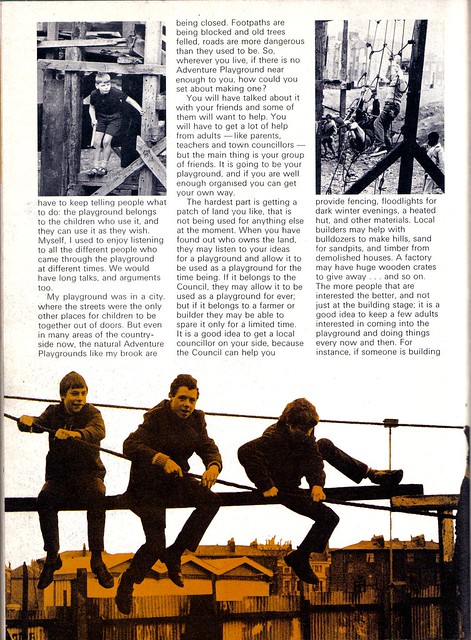
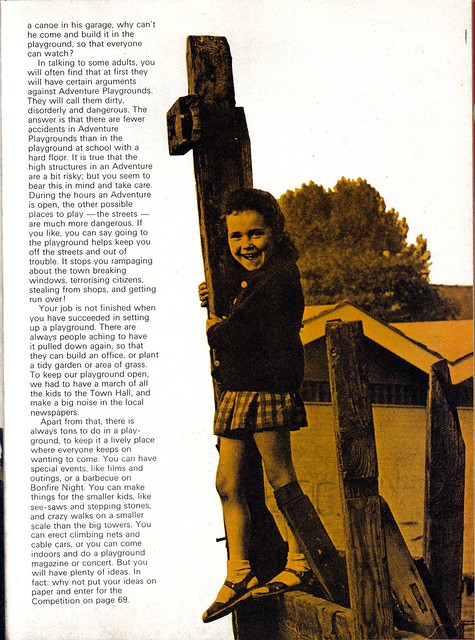
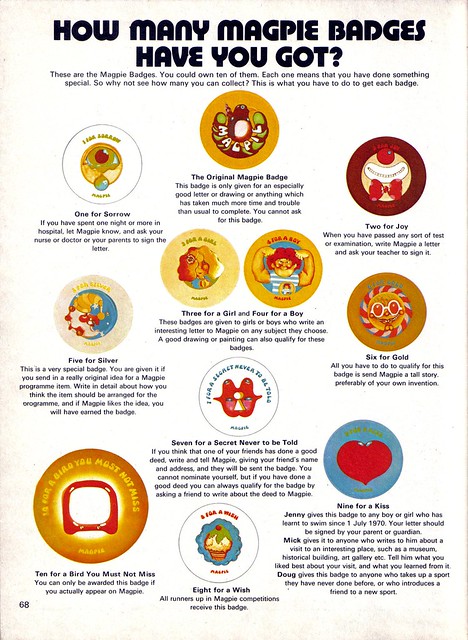
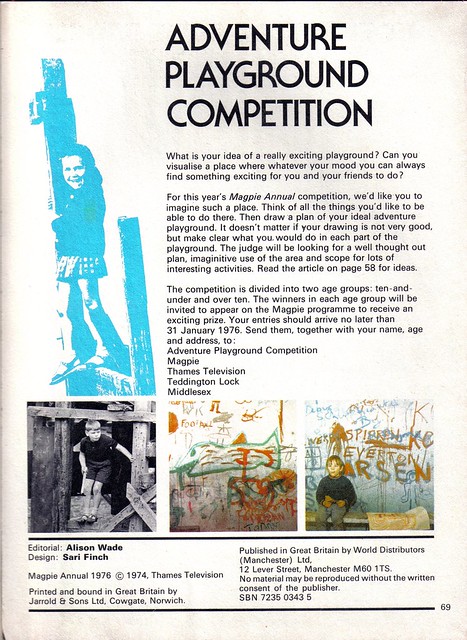
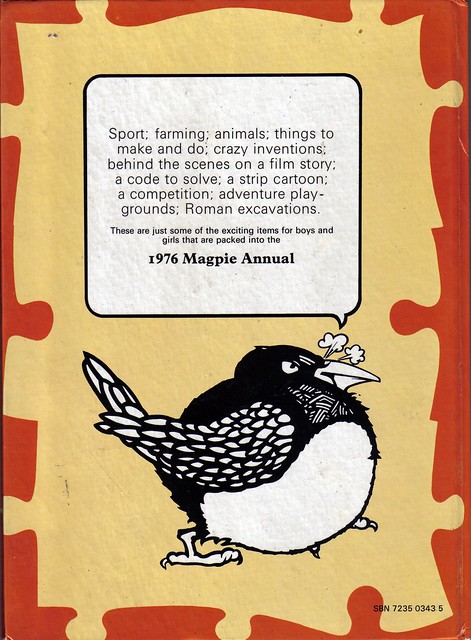
Takes you back doesn't it?

Hi there and welcome to Ado's Blog. I am obsessed with nostalgia, especially 1960s & 1970s nostalgia and I enjoy nothing more than reflecting on days and times that have sadly long since gone! So join me, as I take a nostalgic gander down Memory Lane and celebrate all things past and occasional present, both good and bad! (All images used that are copyrighted are copyrighted to their respective publishers and are only used here for review purposes.)


Writing credit for "Morning Has Broken" has occasionally been erroneously attributed to Cat Stevens, who popularised the song abroad. The familiar piano arrangement on Stevens' recording was performed by Rick Wakeman, a classically trained keyboardist best known for his tenures in the English Progressive Rock band Yes.
In 2000, Wakeman released an instrumental version of "Morning Has Broken" on an album of the same title. That same year he gave an interview on BBC Radio Five Live in which he said he had agreed to perform on the Cat Stevens track for £10 and was "shattered" to be omitted from the credits, adding that he never received the money either.
When shaping "Morning Has Broken" for recording, Stevens had to start with a hymn which took around 45 seconds to sing in its basic form. Producer Paul Samwell-Smith told him he could never put something like that on an album, and that it needed to be at least three minutes in length. Although an acoustic demo exists of Stevens playing an early version which lasts almost three minutes. Prior to the actual recording Stevens heard Wakeman play something in the recording booth. It was a rough sketch of what would later become "Catherine Howard". Stevens told Wakeman that he liked it and wanted something similar as the opening section, the closing section and, if possible, a middle section as well. Wakeman told Stevens he could not as it was his piece destined for a solo album, but Stevens persuaded him to adapt his composition. The familiar piano intro and general structure of the piece may be attributed to Stevens or to Wakeman.

On his return to performance as Yusuf Islam, Stevens made a payment to Wakeman and apologized for the original non-payment, which arose from confusion and a misunderstanding on the record label's part. On a documentary aired on British television, Wakeman stated that he felt Stevens's version of "Morning Has Broken" was a very beautiful piece of music that had brought people closer to religious truth. He expressed satisfaction in having contributed to this.


There was also a 1980 marionette/puppet-based television show that I remember very well, produced by long-time Gerry Anderson associates Mary Turner and John Read for ITC Entertainment, that featured the characters from the books. The stories for the television series were different from those contained in the books and were written mainly by Denis Bond (this time under his real name), though other writers such as Rosemary Kingsland also contributed. The series characters were voiced by the husband-and-wife team of Judy Bennett and Charles Collingwood probably best known for their work in The Archers. 52 ten minute editions were produced.




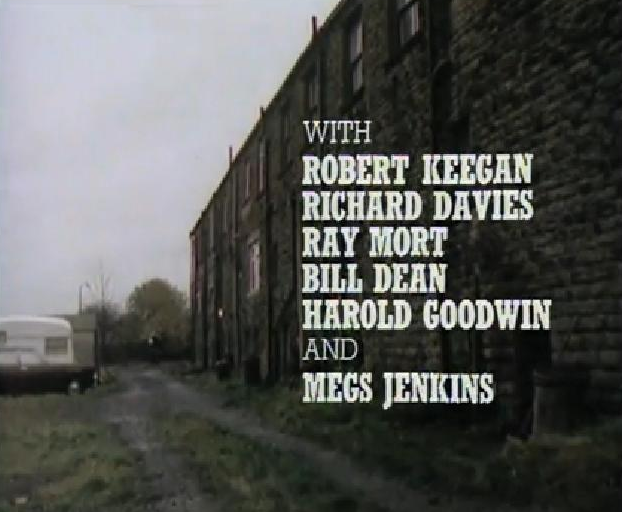
As a kid I loved, Oh, No. It's Selwyn Froggitt! the Situation Comedy from ITV that ran from 1974 to 1977.
It starred the great Bill Maynard long before his Greengrass days as the council labourer, Scarsdale Working Men’s Club secretary, hapless handyman and all-round public nuisance Selwyn Froggitt. It was created by Roy Clarke, who wrote the pilot episode transmitted in 1974, though the series was mostly written by Alan Plater. It was made for the ITV network by Yorkshire Television.

Set in the fictional Yorkshire Town of Scarsdale UK, the show was centred around the bungling exploits of Selwyn Froggitt, a burly, balding, good-natured council labourer (Maynard) usually clad in a donkey jacket, with pretensions to intellectual competence (he carried the Times rolled up in the pocket of his donkey jacket, although was hardly ever seen reading it, preferring to tell people that "There was an article about it in the Times") and an urge to improve his life and that of everyone around him. Froggitt was on the committee of his local Working Men's Club, serving as concert secretary in charge of booking 'turns'.

Selwyn Froggitt was fundamentally and spectacularly incompetent at everything he turned his hand to, being equally inept at his day job (digging holes and filling them in), do-it-yourself at home, and booking acts for the club.
The show featured a number of catchphrases, the most memorable being: Maynard's "Magic, our Maurice!" accompanied by two thumbs up, his mother's (Megs Jenkins) "Don't open that cupboard, our Selwyn, things fall out!" and almost everyone at the club's "A pint of cooking and a bag of nuts, Raymond." Raymond the barman (Ray Mort) was fond of answering the telephone with a number of highly fictitious and fanciful addresses. All decisions taken by the club committee were taken on a "Show of hands..." and "Carried unanimous".

Froggitt's accomplices on the committee included the dour Scouser Jack (Bill Dean) later to play Harry Cross in Brookside, Harry (Harold Goodwin) and excitable, stereotypical Welshman Clive (Richard Davies). His brother Maurice was played by Robert Keegan.
The show's humour included a fair measure of slapstick alongside Alan Plater's typical northern humour.

In 1978 after three successful series under the title of Oh, No. Its Selwyn Froggitt. Yorkshire Television changed the format of the show radically. The new version of the series was entitled Selwyn; all of the regular cast bar Maynard departed to focus on other work and the Froggitt character became entertainments manager at a seedy holiday camp on the east coast. Alan Plater was no longer involved with the show during that series. Selwyn ran for only a single series with disappointing audience reactions, a planned second series was cancelled. And so, another comedy classic disappeared into the sit-com grave yard!



Wham! had been a dominant force in the UK Singles Chart in 1984 and news that they were planning a Christmas single meant that a battle for the coveted Christmas No1 spot in the UK seemed set to be between Wham! and the year's other big act, Frankie Goes to Hollywood, who had achieved a third No1 in early December with "The Power of Love". However, the Band Aid project, helmed by Bob Geldof, produced the No1 single. Wham!'s offering peaked at No2 for much of the period, although George's involvement in Band Aid meant that Wham! still had an input. Wham! subsequently topped the monies raised by Band Aid by donating all of their "Last Christmas/Everything She Wants" royalties to the Ethiopian Famine appeal.

"Last Christmas" did make No1 in various other countries.
The single sold well over a million copies and became the biggest selling single in UK chart history not to reach No1. A year later, it was re-issued for Christmas again (this time without a billed flip-side) and got to No6. A second re-issue at Christmas 1986 - by which time Wham! had split - stalled outside the top 40.
The song gradually sold in Japan, and finally became the best-selling single that did not reach that country's top-10 chart, selling more than 600,000 copies and peaking on the chart at No12 in 1992.
Since 1997, the song enters the German Single charts every year and peaked at No4 in 2007. In the airplay charts the songs enters every year the Top 5.
In 2007, the track re-entered the UK Top 20 and hit the UK iTunes Top 10.
In 2008, the song re-entered the UK Singles Chart again, this time at No36 and peaked at No26.
In 2009, the song re-entered the UK Singles Chart at No39.
In 2009, the song re-entered the Spanish Lista de Canciones (Singles Chart) at No9.
In Germany, the song is the most successful Christmas single of all time with 94 weeks on the German Singles Chart and a peak position of No. 4. In January 2008, the song fell from No. 4 to No. 64 there, making it the biggest fall out of the top ten of the German Singles Chart.

