Saturday, 13 August 2011

Sing Lofty (1976)

Windsor Davies And Don Estelle - Sing Lofty
Don Estelle & Windsor Davies were best known in the 1970s for their performance in the classic sitcom, "It Ain't Half Hot Mum." The duo also enjoyed a brief pop career with a top ten hit back in 1975 with, "Whispering Grass." This particular album from the duo released in 1976 reached its highest spot of No 10 at the end of January 1976 and spent 8 weeks in the charts.
Windsor Davies And Don Estelle - Whispering Grass
Whispering Grass reached No 1 in the charts back in 1975 and spent 12 weeks in the charts.

Doctor Who and the Radio Times!

It's time once again to pay homage to the good old Radio Times and its long association with Doctor Who.

The page above is from an edition back in 1977: The page below is from 1983.

The page below is from an edition back in 1967.
The page above is taken from a 1970 edition.

The front cover of the 20th Anniversary edition.

Man about the House (1973)

Man About the House (UK) tv show photo
Man About the House was a British sitcom that starred Richard O'Sullivan, Paula Wilcox and Sally Thomsett that was broadcast for six seasons on ITV from 1973 to 1976. It was created and written by Johnnie Mortimer and Brian Cooke. The series was considered daring at the time due to its subject matter of a man sharing a flat with two single girls. It was made by Thames Television, and two spin-offs were later made: George & Mildred and Robin's Nest. In 2004, it came 69th in a poll to find Britain's Best sitcom. The series was remade in the United States as, Three's Company in 1977. A film version of Man About the House was released in 1974.

Young flatmates Chrissy and Jo find a stranger, student Chef Robin Tripp, asleep in their bath the morning after the farewell party for their departed flatmate Eleanor. They are taken by Robin, and are especially impressed by his culinary skills at breakfast. Neither Chrissy or Jo can cook, and "Eleanor didn't leave the recipe for toast."

Chrissy and Jo are both from regional England and moved out on their own to live in London. They both work for the same firm. When he meets the girls Robin has been in London two days, having moved from his home town of Southampton to attend college.

The girls are unimpressed with Gabby (Helen Fraser), a pushy young woman who arrives hoping to move in to Eleanor's room. Learning that Robin has been staying at the YMCA they easily convince him to move in.

Robin moves in on a platonic basis, and Chrissy tells the Landlord, George Roper that Robin is gay to pre-empt objections to the mixed-sex living arrangement. In the second episode Robin's true sexuality becomes known to Mildred. Mildred openly flirts with Robin at every opportunity.

Robin frequently acts in a flirtatious manner toward Chrissy and Jo. The women have no romantic interest and spurn his mild advances, and quickly adapt to his presence in the flat.

Landlord George Roper, in truth a sub-letting landlord placed by the council, is a bumbling, accident-prone and gullible man under the thumb of his domineering and sexually-frustrated wife Mildred. Mildred takes out her frustrations with George's lack of class and sexual inadequacy by making suggestive remarks to Robin and frequently siding with the tenants against George. Yet for all their battles the Ropers are a devoted couple.

Robin's friend Larry, a lovable rogue, appears in two first season episodes. In the second season he moves into the loft apartment and is a frequent source of trouble. Another occasional cast member is George's friend, dim schemer Jerry.

Robin's brother Norman Tripp (Norman Eshley) appears through the final season, and starts a romance with Chrissy. Norman Eshley had a previous guest role in the series two years earlier playing a different character, and was also a member of the main cast of the spin-off series, George and Mildred in which he played The Ropers' snobbish neighbour Jeffrey Fourmile.


Gloria Gaynor - I Will Survive

Gloria Gaynor,I Will Survive,UK,CD ALBUM,466957
Gloria Gaynor - I Will Survive the 2009 issue UK 12-track CD album - If ever a song title was prophetic in terms of an artist's career, then surely 'I Will Survive' is a prime example of a title becoming a self-fulfilling prophecy when one discusses the career of Gloria Gaynor. However, let's not forget that the hit which kicked it all off for Gloria and effectively started the Disco boom was her dance-floor friendly version of the Jackson Five's 'Never Can Say Goodbye'. Following her first two albums for MGM and her subsequent seven album releases for Polydor, Gloria switched labels and recorded an album of brand new material [apart from the 2 hits] for French label Ecstasy which signaled a change in direction with Gloria moving from the more Disco orientated material towards a more Pop and R'n'B sensibility. This is that album with the additions of 2 Bonus Remixes of 'I Will Survive'.)

Loneliness of the Long Distance Runner (1962)

Tony Richardson's film of Alan Sillitoe's short story intersperses Colin's (Tom Courtenay) life in borstal, where he is encouraged by the Governor to take up running, with flashbacks to the months leading up to his arrest.

The Loneliness of the Long Distance Runner was released in 1962, quite late in the new wave cycle. In his memoirs Richardson describes shooting as "a lovefest... I felt free and happy making a film for the first time without constraints."

By contrast with the theatrical basis of Richardson's earlier films Look Back in Anger (1959) and The Entertainer (1960), the camera is very evident. The 'poetic realist' approach dominates - Colin's runs are shot in an impressionist style and there is an experimental approach to sound, for instance in a scene in which the boys riot in the canteen. Instead of being portrayed naturalistically, everyday scenes are shot in a heightened way reflecting Colin's state of mind and his view of authority.

The film faced more unfavourable criticism at the time than many of the new wave films. Critics noted the influence of the French New Wave, especially François Truffaut. The stylistic devices were considered too gimmicky and derivative and the anti-authoritarianism denounced as crude. There is certainly a lack of subtlety in some scenes but they can still prove effective, for example the beating of Stacey as the boys sing 'Jerusalem'.
Even hostile critics, however, praised the intensity of Tom Courtenay's performance as Colin. Himself rom a working-class background, Courtenay is convincing and charismatic as the rebel determined to outwit the system. Colin refuses to conform to be a victim, thug or dupe of authority. By stopping in front of the finishing line, he proves his talent, but denies the Governor the credit.
The film is very much of its time, in context and style. Like the other new wave films it shows a British working class with money for the first time but still without power or prospects. Stylistically perhaps its time has come round again - the fast pace and mixing of styles seems fashionable once more.

THE

MONTHLY FILM BULLETIN

Published by

THE BRITISH FILM INSTITUTE

Volume 29, No.346, November 1962, page 148

LONELINESS OF THE LONG DISTANCE RUNNER, THE (1962)

Colin Smith is sent to Ruxton Towers, a stately home which has been turned into a Borstal institution. Son of a £9 a week factory worker who died of cancer, Colin is by nature a rebel, an anarchist. His mother splashes the £500 employer's compensation for his father's death on a new carpet and a "telly", then takes up with a fancy man whom Colin loathes. A weekend spent with his friend Mike and a couple of girls at Skegness ends in frayed tempers and a dispiriting return; the exhilaration of the robbery, carried out with Mike's help; the bullying police enquiries and arrest. Colin feels no guilt at finding himself in Borstal, only contempt for Society - an inimical image most strongly embodied for him in the bland, well-meaning presence of the Borstal Governor. The one thing Colin does well is run, and the Governor trains him to win the first long-distance cross-country race ever arranged between the institution and a team of amiable young men from a neighbouring public school. But the Governor's obsessive faith in Colin urges the boy to set up a record not in running but in sheer, basic bloody-mindedness. He runs his rival into the ground then, within striking distance of the tape, stops dead. His victory solitary but sweet, he is sent back to his old, useless job in the workshops, stripping down gas-masks.

Fashionableness can be a fickle, limiting thing for an artist, and needs considerable personal style if his efforts are not only to persuade for the moment but to endure. Tony Richardson's expansion, via the author's own screenplay, of Sillitoe's wiry but tenuous short story is very fashionable indeed. Its protagonist is young, disingenuous, a social outlaw; his environment a mixture of grimy restriction and tantalising, lyrical glimpses of freedom; his gesture of unrelenting war a terse, deliberate refusal to accept Society's conditional offer of integration and the big Step Up - win a race like any self-respecting public school boy; take your chance of fame in the Olympic Games. Richardson, the producer and director, makes his point clearly enough, but at quite a price: bias trailing off into parody, forcefulness impaired by stylistic inconsistency, a dispiriting familiarity of approach.

First, there are the flashbacks, accounting for Colin's present predicament at a length (about half the running time?) in no way justified by their content, which adds up to nothing we haven't seen time and time again in the recent past, or by their uninteresting and laboured presentation (the spending spree done after the style of a TV shopping gazette). The script as a whole has that bitty, desultory, involved construction which is the bane of so much British screenwriting, old and new; every attempt to hide the fact that a tiny anecdote is being spun out leads to the most reactionary longing on the part of the viewer for some solid, dramatic meat of the most old-fashioned kind. Just as fussy are the devices tagged on to some otherwise attractive running scenes - water-reflected shots, upside-down shots, whirling tree-top shots, and the self-indulgent barrage of "thought stream" cut-ins from previous flashbacks during the actual race, a sequence simply crying out for clarity.

The lack of confidence behind this restless tricksiness extends to all sorts of other things. The riot, for instance, is shot in fast, lateral tracking movements back and forth, indicative less of trapped rage on the screen than of panic behind the view-finder. The photographic texture keeps switching from the grainy, pseudo-documentary to the intrusively pretty (much of the open air material). It seems significant that Lassally's camerawork is most effective at its closest and most straightforward, moving in on a fight or observing the subtle irritations of Redgrave's Governor in the face of the inanities of a psychiatrist-housemaster. The sound-track not only plugs ironies like the gap between boys singing Jerusalem and one of their number being chased, caught and probably beaten up; it goes in, in a studied, academic way, for such recently popular devices, à la Saturday Night and Sunday Morning as dialogue preceding image. When these devices step outside the realm of British "new wave" film-making into what can only be described as cribs (though doubtless an homage was intended) from Truffaut's Quatre Cent Coups, one's doubts as to the course Richardson's style is taking reach disquieting proportions. Speeded-up movement, jump-cuts, bits of business with a hat and a typewriter, the interview with the psychiatrist, even if such borrowings were justifiable they would still have to work in themselves in a way they certainly don't here. And, anyway, where is Richardson's own style?

Against this, and a great deal of childishly unacceptable caricature (the concert artists, the pompous TV Tory, elements in Redgrave's sometimes perceptively underplayed Governor), must be set several excellent performances - James Bolam as the friend, almost all the boys (surprisingly enough the public school types are absolutely believable, done with untypical generosity) and Tom Courtenay as Colin. Courtenay displays a surly iconoclasm tempered with humour and intelligence that preserves a much-needed equilibrium between the viewer's sympathy and his natural impatience. His portrait of a sturdy recalcitrance channelled by depressingly unhealthy, hopeless circumstances into something genuinely tragic is exactly right. He persuades, in fact, where the film doesn't. Still, one looks forward to Richardson's next, Tom Jones, with undiminished interest and curiosity.


The Monthly Film Bulletin was published by the British Film Institute between 1934 and 1991. Initially aimed at distributors and exhibitors as well as filmgoers, it carried reviews and details of all UK film releases. In 1991, the Bulletin was absorbed by Sight and Sound magazine.

The Loneliness of the Long Distance Runner

The Loneliness of the Long Distance Runner - 11 x 17 Movie Poster - Style A

Directed byTony Richardson
Written byAlan Sillitoe
StarringTom Courtenay
Michael Redgrave
James Bolam
Ray Austin
John Thaw
Alec McCowen
Editing byAnthony Gibbs
StudioWoodfall Film Productions
Distributed byContinental
Release date(s)1962
Running time104 min
LanguageEnglish


Robert Robinson (1928-2011) R.I.P.


Veteran BBC broadcaster and presenter Robert Robinson has died at the age of 83 following a long period of ill health, it has been reported.

Robinson presented numerous radio and television programmes for the Corporation in a career that spanned five decades.

They included Ask the Family, Stop the Week, Call My Bluff and Radio 4's Today programme.

Following his death at St Mary's Hospital, Paddington, his daughter, Susie Robinson, told the BBC: "He had a very long, productive and successful life and we'll all miss him terribly."

Robinson was born in Liverpool and went on to study at Oxford University where he met his wife of more than 40 years, the actress Josee Richard.

He began his career in magazines and newspapers, before moving into broadcasting and in 1974 was named Radio Personality of the Year following his tenure on the Today programme.

However, it was hosting quiz shows - what he referred to as his "humble calling" - that most will remember him for.

He was quizmaster on long-running game shows including Radio 4's Brain of Britain and only stood down as chairman of the show last year.

At his retirement the then-Radio 4 controller, Mark Damazer, said: "The brilliant Robert Robinson defined the art of the quiz show host.

"He presided over Brain Of Britain with sympathy for the contestants, wit and panache."

The Who - Quadrophenia (1973)

The Who "Quadrophenia" The original classic 1973 US MCA label 16-track STEREO vinyl double LP, this is the band's second iconic rock-opera album, housed in a superb vintage gatefold picture sleeve with 44-page integral black and white picture booklet! A classic in anyone's terms.
The Who,Quadrophenia - Sealed,USA,Deleted,DOUBLE LP,342574
Record One:
1. I Am The Sea
2. The Real Me
3. Quadrophenia
4. Cut My Hair
5. The Punk And The Godfather
6. I'm One
7. The Dirty Jobs
8. Helpless Dancer
9. Is It In My Head
10. I've Had Enough

Record Two:
1. 5:15
2. Sea And Sand
3. Drowned
4. Bell Boy
5. Doctor Jimmy
6. The Rock
7. Love, Reign O'er Me

Ena on the Tv-Times (1968)

This article comes from an edition of Tv-Times way back in 1968 and cast a big doubt at the time as to whether or not the late, great Violet Carson was leaving the famous cobbles for good.

Friday, 12 August 2011

Death of a Legend (1991)

This edition of the Sun newspaper comes from 1991 and carries the news of Freddie Mercury's passing.

TV-Times (1961)

This cover of the TV Times dates back to 1961 and features as its front cover, Griffith Jones & Vivien Merchant in the Television Playhouse, "The Collection."

Top of the Pops Annual (1978)


This Top of the Pop's annual originates back to 1978. Features inside include, David Essex, Queen,Bay City Rollers, Thin Lizzie, Tina Charles, 5000 volts, Slik, G Band, Sailor, Kursal Flyers, ELO, Abba, Wings, Rubettes, Showaddywaddy and lots more.

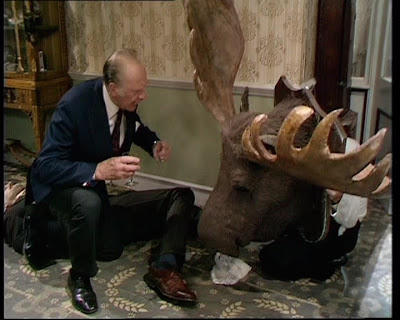
Fawlty Towers - Series One, Episode Six - The Germans' (1975)


"The Germans" was the sixth episode of the classic BBC Sitcom Fawlty Towers. It is fondly remembered for its line "Don't mention the war" and "John Cleese's funny walk" when he is impersonating Adolf Hitler.
Sybil is in the hospital for three days for minor surgery to remove an ingrown toenail. When Basil visits her, she reminds him of all his tasks over the next few days: Running a fire drill, hanging a moose head, etc. Basil fights with the Sister caring for Sybil. When the Doctor tells him Sybil will be in a lot of pain after the operation, Basil is thrilled!
Back at Fawlty Towers, Basil has a confusing conversation with Major Gowen about women, a cricket game and the proper racial slurs for Indians. When the Major learns a group of German guests are coming to the hotel, he launches into an angry tirade against Germans. After the Major wanders off, Basil tries to hang the moose head, but he is interrupted by a phone call from Sybil reminding him to hang the moose head. Basil tries to ask Manuel for a hammer, but he gives up after Manuel thinks that Basil wants a hammer sandwich and wants to see his hamster, Basil leaves to get it himself. While he is gone, Manuel steps behind the front desk to tidy up and practice his English. The Major returns to hear a voice coming from behind the counter and thinks it is coming from the moose head. Basil returns and hangs the moose head, but it immediately falls on his head, and he trips over Manuel trying to get to the phone to talk to Sybil again.

The next morning, Basil hangs the moose head again, but one of the antlers keeps drooping. There are just a few minutes remaining until the fire drill, and Sybil calls to remind Basil of the drill and say the key for the fire alarm is in the safe. Basil retrieves the key, but he trips the burglar alarm, which the guests mistake for the fire alarm. As Basil tries to explain, the guests ask to hear both bells so they can tell the difference. Hearing the fire bell from the demonstration, Manuel and Polly think the fire bell means the drill has started, so Basil has to explain the situation to them, too. After the demonstration, Basil says the real drill will start in 30 seconds, so the guests stand about in the lobby, to Basil's annoyance.

In the kitchen, moments before the drill is to start, Manuel starts a real fire. The drill then commences. The panicked Manuel tries to explain the situation to Basil, but he does not understand and locks the poor waiter in the burning kitchen. Basil lets the guests back in, but Manuel's frantic banging makes him open the kitchen door. Basil sees the fire and tells the guests to exit the building again. He tries to start the alarm again, but he cannot find the key. He hurts his hand trying to smash the glass and hurls the typewriter at it with no success, so he uses the phone instead. He tries to use the fire extinguisher, but he blasts himself in the face, which temporarily blinds him. Trying to help, Manuel accidentally smacks Basil in the head with a frying pan he had been using to try to smother the flames and knocks Basil out.

Basil comes to in the hospital, where he is being treated for a concussion. The confused, disoriented Basil insults the Sister and insists on going home. The Doctor puts him to bed, but after he is gone, Basil sneaks out.
Back at Fawlty Towers, the German guests have arrived. Basil tries to speak German. However he does not understand it, since two German guests want to hire a car, but Basil thinks that they are volunteering to get some meat. Polly encourages Basil to lie down, but he insists on trying to serve lunch to the Germans. Despite warning Polly "don't mention the War", he makes multiple references to World War II accidentally at first, but eventually becoming worse as he goes on. When his references drive one German guest to tears, Basil tries to cheer her up with a joke about a bomber over Berlin. When that fails, he tries an impression – of Adolf Hitler, which involves goosestepping around the lobby. The Doctor arrives to give Basil a sedative and take him back to the hospital. Basil makes a run for it hitting Manuel to distract the Doctor, but the moose head falls on his head which knocks him out again while the moose ends up on Manuel's. Manuel complains that Mr Fawlty hit him on the head but the major walks by and says "No, you hit him on the head, you naughty moose!" The episode ends with the German guests wondering "how ever did they win?" (referring to the War).

The John Lennon Collection (1982)

John Lennon,The John Lennon Collection,USA,Promo,Deleted,POSTER,456109
The John Lennon Collection. The original 1982 US Geffen label promotional only 26" x 38"
full colour poster to promote the release of the compilation album, featuring a great shot of John
sitting on a bed barefoot playing his guitar
, along the bottom is 'The John Lennon Collection'
black & white text plus tracklisting for the album with highlighted 'Cassette Only' tracks.

Thursday, 11 August 2011

The Love Bug (1968)

The Love Bug (1968) is the first in a series of comedy films made by Walt Disney Productions that starred an anthropormorphic pearl-white, fabric-sunroofed 1963 Volkswagen racing Beetle named Herrbie. It was based on the 1961 book Car, Boy, Girl by Gordon Buford.

The movie follows the adventures of Herbie, Herbie's driver Jim Douglas (Dean Jones), and Jim's love interest, Carole Bennett (Michele Lee). It also features Buddy Hackett as Jim's enlightened, kind-hearted friend, Tennessee Steinmetz, a character who creates "art" from used car parts. English actor David Tomlinson portrays the villainous Peter Thorndyke, owner of an auto showroom and a SCCA national champion who sells Herbie to Jim and eventually becomes Jim's racing rival.

The Love Bug

Jim Douglas is a down-on-his luck racing driver, reduced to competing in Demolition Derby races against drivers half his age. Jim lives in an old fire hlouse overlooking San Fransisco Bay with his friend and mechanic, Tennessee Steinmetz, a jolly Brooklynite who constantly extols the virtues of spiritual enlightment, having spent time amongst Bhuddist Monks in Tibet, and builds 'art' from car parts. After yet another race ends in a crash (and Tennessee turns his Edsel into a sculpture), Jim finds himself without a car and heads into town in search of some cheap wheels. He is enticed into an upmarket European car showroom after setting eyes on an attractive sales assistant, Carole. Jim witnesses the dealership's British owner, Peter Thorndyke, being unnecessarily abusive towards a white Volkswagen Beetle that rolls into the showroom, and defends the car's honour, much to Thorndyke's displeasure. The following morning Jim is shocked to find that the Beetle is parked outside his house and that Thorndyke is pressing charges for grand theft. A heated argument between Jim and Thorndyke is settled when Carole persuades Thorndyke to drop the charges if Jim buys the car on a system of monthly payments.
Jim soon finds the car is prone to going completely out of his control and believes Thorndyke has conned him. Tennessee, however, believes certain inanimate objects to have hearts and minds of their own and tries to befriend the car, naming it Herbie. Jim's feelings about his new acquisition soon improve when it appears Herbie is intent on bringing him and Carole together. He also discovers Herbie to have an incredible turn of speed for a car of his size and decides to take him racing. After watching Jim and Herbie win their first race together, Thorndyke, himself a major force on the local racing scene, offers to cancel the remaining payments Jim owes on Herbie if Jim can win a race that they will both be competing in at Riverside later that month. Jim accepts, and despite Thorndyke's underhanded tactics, he and Herbie take victory. Over the next few months they go on to become the toast of the Californian racing circuit, while Thorndyke suffers increasingly humiliating defeats. Thorndyke finally snaps, and persuades Carole to take Jim out on a date while he sneaks round to Jim's house. After getting Tennessee drunk on his own Irish coffee recipe, Thorndyke proceeds to tip the remainder of the coffee into Herbie's engine. At the following day's race, an apparently hungover Herbie shudders to a halt while Thorndyke blasts to victory.
File:Deanjones withVW.jpg
That evening, Jim returns home in a brand new Lamborghini, having agreed to sell Herbie to Thorndyke to pay the remaining installments he owes on it. Jim states he needs a 'real car' for the upcoming El Dorado road race, but finds no sympathy from Tennessee, Carole, or Herbie, who jealously proceeds to smash up the Lamborghini, proving to Jim once and for all he has a mind of his own. By the time Thorndyke arrives to collect Herbie, the Volkswagen is nowhere to be found, and Jim sets off into the night hoping to find Herbie and make amends before the car is seized by Thorndyke's goons. After narrowly escaping being torn apart in Thorndyke's workshop, and a destructive spree through China Town, Herbie is about to launch himself off the Golden Gate Bridge when Jim reaches him. In his attempt to stop Herbie from driving off the bridge, Jim himself nearly falls into the water. Herbie pulls Jim back to safety, but then is impounded by the San Fransisco Police Department. There, Mr. Wu, a Chinese businessman whose store was damaged during Herbie's rampage, demands compensation that Jim can no longer afford. Using the Chinese he learnt while in Tibet, Tennessee tries to reason with Wu, and learns that he is a huge racing fan who knows all about Jim and Herbie's exploits. Wu is willing to drop the charges in exchange for becoming Herbie's new owner. Jim agrees to this, as long as Wu allows him to race the car in the El Dorado. If Jim wins, Wu will be able to keep the prize money but has to sell Herbie back for a dollar. Wu replies to this proposal in clear English: 'Now you speak my language!'.

The El Dorado runs through the Sierra Nevada mountains from Yosemite Valley and back. Before the start of the race, Thorndyke persuades Mr. Wu to make a wager with him on its outcome. Thorndyke (with his assistant Havershaw acting as co-driver) pulls every trick in the book to ensure he and his Thorndyke Special are leading at end of the first leg of the race. As a result of Thorndyke's shenanigans, Jim (with Carole and Tennessee as co-drivers) limps home last with Herbie missing two wheels and falling to pieces. Despite Tennessee's best efforts, it looks as if Herbie will be unable to start the return leg of the race the following morning. Thorndyke then arrives and claims that this makes him the new owner of the car. Wu regretfully tells Jim of the wager and that in accordance with its terms this is true. Thorndyke, thinking he is Herbie's new owner, gloats to Jim about what he's going to do to Herbie and kicks Herbies front fender, but Herbie then unexpectedly lurches into life and chases Thorndyke from the scene, showing he is more than willing to race on. Thanks to some ingenious shortcuts, Jim is able to make up for lost time in the second leg and is neck and neck with Thorndyke as the approach the finish line. In the ensuing dogfight, Herbie's hastily welded-together body splits in two. The back half of the car (carrying Tennessee and the engine) crosses the line just ahead of Thorndyke, while the front (carrying Jim and Carole) rolls over the line just behind, meaning Herbie takes both first and third place.

In accordance with the terms of the wager, Mr. Wu takes over Thorndyke's car dealership (hiring Tennessee as his assistant), while Thorndyke and Havershaw are relegated to lowly mechanics. Meanwhile, a fully repaired Herbie chauffeurs the newlywed Jim and Carole away on their honeymoon.

File:Herbie on two.jpg

The Love Bug
The Love Bug - 27 x 40 Movie Poster - Style A
Directed byRobert Stevenson
Produced byBill Walsh
Written byBill Walsh
Don DaGradi
StarringDean Jones
Michele Lee
David Tomlinson
Buddy Hackett
Music byGeorge Burns
CinematographyEdward Coleman
Editing byCotton Warburton
StudioWalt Disney Productions
Distributed byBuena Vista Distributions
Release date(s)December 24, 1968
Running time108 minutes
CountryUnited States
LanguageEnglish

The Carry On Films Calendar (2008)

Carry On Films Calendar 2008, Carry On Calendar
Carry On Calendar - The Official Carry On Films 2008 calendar - Oh what a Calendar Carry On! Sid James and Co. are back for another 12 months of typically bawdy British humour. They don’t make em’ like they used to! The 2008 Carry On Calendar features posters, scenes and pictures from Carry On Movies through the years featuring a whole host of Carry On stars such as Kenneth Williams, Jim Dale, Sidney James, Joan Sims, Kenneth Connor, Liz Fraser, Dilys Laye, Angela Douglas, Charles Hawtrey, Bill Owen and Bernard Cribbens.