Babycham sparkles, just the way I want to feel. This classic ad for Babycham dates back to 1975.
Hi there and welcome to Ado's Blog. I am obsessed with nostalgia, especially 1960s & 1970s nostalgia and I enjoy nothing more than reflecting on days and times that have sadly long since gone! So join me, as I take a nostalgic gander down Memory Lane and celebrate all things past and occasional present, both good and bad! (All images used that are copyrighted are copyrighted to their respective publishers and are only used here for review purposes.)
Saturday, 21 April 2012
The King of Gamma Garments - Remembering Leonard Swindley (1960 - 1965)
Leonard Swindley was played by the late, great Arthur Lowe on Coronation Street between 1960 and 1965. The character of Mr Swindley also appeared in two spin-off series following his departure from the Street -Pardon the Expression and Turn Out The Lights, making him a unique character in UK soap opera.
At the time filming commenced of the pilot episode of Coronation Street, the character of Leonard Swindley had not even been cast. Because he wasn't supposed to appear until episode three, auditions were still taking place until Arthur Lowe walked in and read for the producers. Lowe, who went on to become most recognised as Captain Mainwaring in sitcom Dad's Army, was already an established actor by the time of his Coronation Street casting, having been in several feature films, but it was his turn as pompous Mr. Swindley that made him a household name in the early 60s.
In December 1961, only a year after the show's launch, a strike of the actor's union Equity meant that Lowe, who was not under contract with the show at that point, was forced to leave the series along with several other stars of the Street. The strike lasted until April 1962, and Lowe agreed to reprise his role once again, returning in June along with Eileen Derbyshire
Upon hearing of Lowe's decision to quit the series in 1965, ITV bosses offered him the chance to continue in the role as the star of a new sitcom based around his character. The end result Pardon the Expressoin debuted two months on from his final appearance in Coronation Street and ran for two series until 1966. It in turn produced its own spin-off Turn Out The Lights, again based around Swindley, which lasted only six episodes.
Swindley, in his role as lay preacher, was a central figure in the local community. The Mission Hall would regularly play host charity ventures and plays among other uses. Swindley and his assistant Emily also organised several trips out for the locals.
In 1962, Swindley's clothes store was failing and piling debts forced him to sell up. The buyer, Niklos Papagopoulos, was the owner of a successful chain of clothes shops in Manchester called 'Gamma Garments'. Papagopoulos re-opened the store as Gamma weeks later, deciding to keep Swindley on as manager and Emily and Doreen Lostock as his assistants.
After working closely for over three years, Swindley's relationship with his colleague Emily grew and in 1964 she proposed. Swindley hesitated before accepting and a date was set for only a few weeks later. When the wedding day came however, Emily realised that neither of them truly loved each other and decided to call off the marriage. He assured her that he felt the same way and the pair managed to salvage their friendship to continue working together.
The next year, following Arthur Lowe's decision to quit, Swindley was offered a promotion at Gamma Garments and duly accepted, leaving the Mission, and Weatherfield behind. The character later moved on to work as manager for Dobson and Hawkes, the clothes store seen in the spin-off Pardon The Expression.
It's Friday. It's Five O'clock and It's Crackerjack
This classic Radio Times cover dates back to the year of my birth, 1966 and gracing this cover are Leslie Crowther and Peter Glase from the classic Friday afternoon kids show, Crackerjack. Also featured on this cover is Harry Corbett the originator of Sooty!
Saturday, 14 April 2012
Stand and Deliver - Adam & The Ants (1981)
"Stand and Deliver" was Adam & The Ants' most successful single. It entered the UK Top 40 at Number One and stayed there for five weeks. It was featured on their Prince Charming album. The lyric "stand and deliver - your money or your life" was a phrase commonly used by highway man Dick Turpin in 18th century England during robberies.
The song's video features Adam Ant dressed as a "dandy highwayman" who is captured and escapes being hanged from the gallows with help from his accomplices (his band members). The video's opening sequence of Adam Ant putting on his makeup before going out on a robbery became a defining visual image for Adam Ant in the years that followed. The video also has an early appearance by Amanda Donohoe who at the time was Adam's girlfriend.
No Doubt released the song along with their entire music catalogue for those who bought tickets to their North American Tour in 2009, though it is not to be counted as a single officially and will not appear on their upcoming album. They alao performed the song while playing a fictional 1980s band, Snowed Out, in the Gossip Gin episode "Valley Girls" as well as in their 2009 tour during the encore.
Friday, 13 April 2012
Smirnoff - You drink it for what it is (1976)
They say Smirnoff won't put you in the Boss' shoes. We'll drink to that!
This Smirnoff ad originates from the good old days known as 1976.
Elvis on assault charge (1956)
Elvis Presley appeared in a Memphis city court on Oct. 19, 1956 along with Gulf service station employees Edd Hopper (left) and Aubrey Brown. The trio had a fight the previous night when Elvis pulled into the station at Gayoso and Second for repairs and was besieged by fans. Hopper, the station manager, ordered Presley away and a brief altercation ensued. All three were booked for assault and battery and disorderly conduct.
Charges against Presley were dismissed. Hopper and Brown both had to pay fines.
Let's hear it for Penelope Pitstop!
I loved this when I was a kid. The Perils of Penelope Pitstop was an American animated TV series produced by Hanna-Barbera Productions that premiered on CBS on September 13, 1969. The show lasted two full seasons, with a total of 17 half-hour episodes produced and released, the last first-run episode airing on January 17, 1970. Repeats aired until September 4, 1971. It is a spin-off of the Wacky Races cartoon, reprising the characters of Penelope Pitstop and the Anthill Mob. This show airs re-runs on Cartoon Network classic channel Boomerang.
The series was patterned on the silent movie era melodrama cliffhanger movie serial The Perils of Pauline using the most successful characters of Wacky Races, namely Penelope Pitstop, the members of Ant Hill Mob and originally Dick Dastardly and Muttley though Dastardly and Muttley were later dropped in pre-production according to this series DVD release information. Those characters would be later reused in their own series.
Deciding to feature the characters in a different setting, studio heads decided to set the characters into an active adventure format strongly reminiscent of the 1920s. Adding to the cliffhanger serial feel, episodes typically started with a recap such as "Last time we left Penelope, she was in the clutches of the Hooded Claw". Contrary to later editing of the series in rebroadcasts, the original format of the series was to introduce the successive episodes at the end of the just-finished broadcast for the successive week that would present and leave Penelope in the middle of a dangerous situation to overcome. The cliffhanger would end with Penelope being shown placed in direct danger such as being shot out of a circus cannon to land in the wild animal cage. The audience is left there with the indication "Tune in next week for danger in the 'Big Top Trap' ". The successive episode would include recapping the previous week's end scene introduction and continue onto Penelope's successful avoidance of the danger she encountered. In all rebroadcasts of the series since the original broadcasts as well as on the DVD release of the series, these introduction endings have been removed from the main episodes. Some of the foreign broadcasts have retained these introductionary endings, akin the same plot device used in the sci-fi series Quantum Leap.
Also from the Wacky Races was the Ant Hill Mob, originally portrayed as a group of crooks but in this incarnation are now are either reformed, never had the criminal background of their earlier Wacky Races incarnation, or are engaging in a protection racket. The members also has completely new names from the original Wacky Races series (except for their leader Clyde, who was named "Big Clyde" in the Wacky Races), who, with their largely self-aware car, Chugga-Boom, acted as the heroes and were constantly rushing to Penelope's rescue. But their attempts to save her were only half effective. The Mob's reason for being Penelope's friends and guardians is never explained, although the narrator mentions that they were "benefactors."
The Hooded Claw (voiced by Paul Lynde), aided by his pair of near identical henchmen who always speak in unison, the Bully Brothers (both voiced by Mel Blanc), concocted needlessly Goldbergian plots to kill Penelope (such as a device to drop her from an aircraft, cut her parachute, and then have her drop into a box of wildcats). While the Mob often rescued Penelope, as often as not she needed to rescue the Mob from the unintended effects of their attempts to rescue her. While Penelope was curiously helpless whenever The Hooded Claw grabbed her, once he left her tied up for his fiendish plans to take effect, she usually became resourceful and ingenious, sometimes coming up with spontaneous and creative methodologies to escape her peril.
Penelope was always in a different part of the globe for every peril. Mainly she was in America, but she did go to locations such as Egypt, England, the jungle, Baghdad and the North Pole. These settings were painted by background artist Walter Peregoy.
Just like in other spin-off series, like Dastardly and Muttley in their flying machines, the Wacky Races series is never mentioned, not by Penelope, nor by the Ant Hill Mob. Plus the Compact Pussycat from Wacky Races is never seen in the series. Instead of that vehicle, Penelope usually drives a green sports car, or any other vehicle that she finds, or even Chugga-Boom. However, there is a singular reference to the earlier Wacky Races series in this series. In the origin episode "Jungle Jeopardy", in response to Penelope's statement of introducing the character "It's you! My arch enemy, The Hooded Claw!", the Hooded Claw replies "Who did you expect? Dick Dastardly?" The only other suggestion to the Wacky Race version is shown when the Anthill Mob members are all standing behind period convict stripped suit cut-outs in the episode "Carnival Calamity" hackening back to their original criminal versions, opposite to this heroic incarnation. It should be noted this is the only time that the character of Dum Dum is shown in this series with an angry face, same as his Wacky Races version Ring-A-Ding.
Also, in the first sketches of the series, Penelope was supposed to have a younger brother named Johnny Pitstop, who would help the Ant Hill Mob save her from the clutches of the Hooded Claw. In those same sketches, Dick Dastardly and Muttley were supposed to be Johnny Pitstop's personal bodyguards, using once again their car, The Mean Machine. This was all in the first sketches, and never make out in the final works.
Unlike other cartoon shows of the era, The Perils of Penelope Pitstop did not contain a laugh track.
Created by veteran Hanna-Barbera voice actress Janet Waldo, Penelope is a classic "damsel in distress" stock character as in the old serial The Perils of Pauline. Her catchphrase is "Help, help!" (spoken in an affected upper-class U.S. Southern accent). Throughout the series, she displays a curious combination of ingenuity and helplessness. She often figures out clever ways to get out of a jam, and is very athletic; if any sport happens to be mentioned, it is revealed that she was the women's champion in said sport in college. Nonetheless, when her arch-nemesis The Hooded Claw, voiced by Paul Lynde (who, unknown to her, is her guardian Sylvester Sneekly) grabs her, she is somehow incapable of doing anything other than yelling for help. Like the show's villain The Hooded Claw, she often interacted with the narrator of the show.
The Hooded Claw was the main villain and the alter ego of Sylvester Sneekly, Penelope Pitstop's guardian. Contrary to what his name suggests, he has neither a hood nor a claw, preferring to wear a purple suit, and a green hat and cape. In the event of her death, Sneekly stood to inherit Pitstop's fortune. He was a master of disguise, and often aided by his henchmen, the Bully Brothers, twin brothers who dressed alike and talked like movie directors, as well as speaking as one. Each episode's plot involved Sneekly trying to kill Penelope and claim her fortune for himself. She never suspected his intentions, however, because he performed his nefarious deeds only in his costumed persona, The Hooded Claw. However, there was a running gag where Penelope commented to Sneekly that he looked like the Hooded Claw, but there was no way her kind guardian could be that villain. In "Big Top Trap," Sneekley actually reveals to Penelope that he is the Hooded Claw, but Penelope does not believe this, thinking it is just a circus act. Sneekly/Hooded Claw was voiced by Paul Lynde, whose participation was uncredited. (In the Japanese version, he was played by Kyoshi Kawakubo).
Like Boris Badenov in The Rocky and Bullwinkle Show, Sneeky/Hooded Claw would break the "Fourth Wall" by at times directly addressing the narrator as the narrator was revealing the crime to the audience, defeating the surprise the Claw was about to spring. He would then belittle the narrator by calling the narrator "Buster", "Nosy", "Tattle-tale", "busy-body" or "wise guy" for verbally interfering with his crimes. Despite knowing about the narrator and interacting with same, at no time does the Hooded Claw/Sneekly acknowledge that he and all the people of his world are merely characters in a scripted film.
Penelope was often rescued from peril by the Ant Hill Mob, a group of seven diminutive men with exaggerated personality traits, clearly owing quite a bit to the characters of the Seven Dwarfs in the Walt Disney film Snow White and the Seven Dwarfs as well as the Keystone Cops which they obviously imitated twice in the series. The seven members usually were portrayed as having unique usable talents such as Zippy's speed, Pocket's technical intellect and gadgetery, and Dum Dum's marksmanship though at times the members were obviously not effective in using their skills as Pitstop's guardians. The seven members are:
- Clyde – The leader, a caricature of Edward. G. Robinson in Little Caesar and the one in the gray suit; When he gives instructions to the others, they always respond: "Right, Clyde." He gets irritated when the mob screws up or when a certain member of the mob (especially Dum Dum) misinterprets his instructions. His catchphrases are "Oh brother", "No kiddin'", and "You Dum-Dum!". He was voiced by Paul Winchell.
- Dum Dum – (Ring-A-Ding in Wacky Races) Played stupid and is identified by a plum-colored stripe on his hat; his catch phrases are "Here we come, Penelope!" and "What'll we do now, Clyde?". Like his Wacky Races counterpart, he was normally the cause of a plan's failure. Dum Dum also has trouble remembering his own name, and speaks like a clown. He was voiced by Don Messick.
- Pockets – Able to bring out useful objects to get the Mob out of trouble, even ones of ridiculous size. He has a green stripe on his hat, and pockets all over his suit (hence his name). He was voiced by Don Messick.
- Snoozy – The dozy one, sleeping through moments of emergency; but despite sleeping on the job, he's always aware of what's going on at the present time and appears able to pilot Chugga-Boom (the mob's car) while asleep. He can dream up a suggestion that Clyde finds very reasonable. Snoozy has the blue stripe on his hat, and leans over when upright, with his head on Dum Dum's shoulder. Snoozy is the only member of the Mob other than Clyde who is portrayed reliably without a full head of hair. He is a pun on The Seven Dwarfs' Sleepy. He was voiced by Don Messick.
- Softy – Cries at any possible emotional or stressful moment; whether those moments were happy or sad was irrelevant; he often chimes in mother memories. Very seldom does he smile, or even laugh. Viewers can identify him by both his constant blubbering, and his hat's pink stripe. He was voiced by Paul Winchell.
- Yak Yak – The talkative one, made a kind of 'yuk yuk' laugh, no matter how disastrous the news he was imparting. The worse the news he imparts, the harder he laughs. Yak Yak would laugh distinctively when The Mob was in peril, recognizing the danger but would still laugh ("We're gonna crash!! Heeheeheehee!"). Yak Yak is identified by his hat's chartreuse stripe, and his blonde hair. He was voiced by Mel Blanc.
- Zippy – A fast runner and a fast talker. If Pockets cannot provide what the mob needs, Clyde will send Zippy somewhere to get it (which is where he tends to mess up). Whenever Zippy screws up, Clyde would sometimes call him Dippy-Zippy. Like Clyde, his hat has a red stripe on it. He was voiced by Don Messick.
The Ant Hill Mob had previously appeared in Wacky Races alongside Penelope Pitstop, although of all seven Mob members, only Clyde kept his Wacky Races name here. The Mob's original Wacky Races car, the known as The Bullet proof bomb replaced by "Chugga-Boom" (voiced by Mel Blanc), which was mostly articulate and seemed to have a mind of its own though at times the Chugga-Boom seemed completely inanimate and was at those times drawn without eyes on the headlights.
Joe 90 - Top Secret - No 14 (1969)
Features are Agents' Fotofile (readers' photographs), Joe's Hobbies (The Story Of Space Travel Told In Stamps No. 14), a competition to win 100 Corgi Chevrolet SS 350 Camaro models, World Intelligence Network (quizzes and jokes), Champions Of Sport - Lester Piggot, The B.I.G. R.A.T. Tells The Story Of Helicopters, and Great Britain Eleven No. 4 Defender - Bobby Moore.
Thursday, 12 April 2012
Make-us-an-ad: Kelloggs Corn Flakes (1966)
This classic ad for Kelloggs Corn Flakes dates back to 1966 and is encouraging the youngsters of the day to create advertisements expressing in words and pictures what they feel about Kelloggs Corn Flakes. There were three age groups, under 8 - under 12 and under 15. there were three prizes of £25, £15 and £10 with 250 runners up each receiving prizes of £1
Sunday, 8 April 2012
Sacha Distel on the TV Times (1972)
Sacha Distel graces this classic TV Times cover from 1972. Accompanying Sacha on the cover are the late Susannah York & (The Bitch) Joan Collins in a production of Noel Coward's Fallen Angels.
Fallen Angels is a play that opened at the Globe Theatre (now called the Gielgud Theatre) in 1925 and starred Tallulah Bankhead.
The Vulcan's Vulcan - Remembering Mr Spock
First portrayed by Leonard Nimoy in the original Star Trek series, Mr Spock also appeared in the animated Star Trek series, two episodes of Star Trek; The Next Generation, seven of the Star Trek feature films, and numerous Star Trek books, comics, and video games. In the 2009 film Star Trek, Leonard Nimoy reprised his role alongside Zachary Quinto, who played a younger, alternate-timeline version of the character and Jacob Kogan playing Spock as a child.
Spock serves aboard the Starship Enterprise, serving as science officer and first officer, and later as commanding officer of two iterations of the vessel. Spock's mixed human-vulcan heritage serves as an important plot element in many of the character's appearances. Along with James T Kirk and Leonmard McCoy, he is one of the three central characters in the original Star Trek series and its films. After retiring from Starfleet, Spock serves as a Federation ambassador, contributing toward the detente between the Federation and the Klingon Empire. In his later years, he serves as Federation ambassador to the Romulan Empire and becomes involved in the ill-fated attempt to save Romulus from a Supernova.
The character was initially depicted as the USS Enterprise's science officer for the original pilot, "The Cage" (1964). Although "The Cage" did not air, Spock's eleven years of service under the command of Captain Christopher Pike are referenced and depicted in "The Managerie" (1966) and other episodes. The character's first broadcast appearance is in "The Man Trap" (1966), which introduces him as the ship's science officer and first officer under Captain James T Kirk (William Shatner). Star Trek depicts a "troika" of Spock, Kirk, and Doctor Leonard McCoy (De Forest Kelley); while McCoy often acts as Kirk's conscience, Spock offers the captain an emotionally detached, logical perspective. The character also offers an "outsider's" perspective on "the human condition".
Star Trek also presents elements of Spock's upbringing and family. "Journey to Babel" (1967) depicts his parents: Sarek (Mark Lenard), the Vulcan ambassador to the Federation, and Amanda Grayson (Jane Wyatt), a human. Spock's decision to join Starfleet, rather than attend the Vulcan Science Academy, ran contrary to his father's wishes. The relationship between Spock and Sarek is strained and often turbulent, although rooted in an underlying respect and carefully restrained love for each other. The 1973 animated series episode "Yesteryear" shows seven-year-old Spock choosing to pursue a Vulcan lifestyle devoted to logic and suppressing emotion.
At the beginning of Star Trek: The Motion Picture (1979), Spock is no longer in Starfleet, having resigned and returned home to pursue the Vulcan discipline of Kolinhar. Spock is unable to complete the Kolinahr ritual after he senses the coming of V'ger, and rejoins Starfleet to aid the Enterprise crew in their mission. Spock, promoted to captain, is commanding officer of the Enterprise at the beginning of Star Trek 2: The Wrath of Khan (1982).
At the film's end, he transfers his "Katra" – the sum of his memories and experience – to McCoy, and then sacrifices himself to save the ship and its crew from Khan Noonien Singh (Ricardo Montalban). The sequel, Star Trek 3 - The Search for Spock (1984), focuses on his crewmates' quest to recover Spock's body, resurrected by the Genesis matrix in the previous film. At the film's conclusion, Spock's revived body is reunited with his katra. Spock is next seen in Star Trek 4 - The Voyage Home (1986), which depicts his recovery from the after-effects of his resurrection. In the film's final scene, he joins the crew of the newly commissioned USS Enterprise - under Kirk's command. In Star Trek 5: The Final Frontier (1989), Spock and the Enterprise crew confront the renegade Sybok, Spock's half-brother. Star Trek 6 - The Undiscovered Country (1991) reunites the Enterprise crew on a mission to prevent war from erupting between the Federation and Klingon Empire. Spock serves as a special envoy to broker peace with the Klingons after a natural disaster devastates their homeworld.
Spock appears in "Unificatoin" (1991), a two-part episode of Star Trek: The Next Generation. Set 75 years after the events of The Undiscovered Country, the episode focuses on Federation Ambassador Spock's attempt to reunite the Romulans with their Vulcan brethren. Filming of The Undiscovered Country overlapped with production of this episode, and the episode references Spock's role in the film.
Spock's next appearance in the live action Star Trek franchise is the 2009 Star Trek film. In the film's prologue (set 19 years after the events of Unification, and as depicted in the graphic novel Star Trek: Countdown), Ambassador Spock (Nimoy) promises the Romulans he will use Vulcan technology to save them from a rogue supernova that threatens to destroy their Empire. The mission is only partially successful, and in the aftermath Spock is pursued into the past by Nero (Eric Bana), a Romulan driven mad by the loss of his homeworld and family, setting into motion the events of the film.
In the film's opening act, Nero's ship emerges in the year 2233, and through its interaction with the inhabitants, inadvertently creates an "alternate, parallel 'Star Trek' universe". Stranded in the alternate past, the prime version of Spock helps alternate, younger versions of himself and Kirk (Zachary Quinto and Chris Pine, respectively) thwart Nero's attempt to destroy the Federation.
The film also features Jacob Kogan in several scenes depicting Spock's childhood, including his abuse at the hands of other Vulcan children due to his half-Human heritage, and his relationship with his parents (Ben Cross and Winona Ryder). The film also depicts Kirk and Spock's initial clashes at Starfleet Academy, and the gradual development of their friendship based on shared mutual respect, what the elder Spock calls "... a friendship that will define [them] both in ways [they] cannot yet realize." A major change in characterization from the primary timeline is alternate Spock's involvement with alternate Uhura (Zoe Saldana), his former student. At the end of the film, the young Spock opts to remain in Starfleet, while his older self stays in the altered universe to aid the few surviving Vulcan refugees, as Nero had destroyed Vulcan, Spock's home planet.
Spock, as originally described in Gene Roddenberry's 1964 pitch for Star Trek, is "probably half Martian, he has a slightly reddish complexion and semi-pointed ears". Early versions had the character ingest energy through a plate in his stomach. Writer Samuel A Peeples told Roddenberry these attributes made Spock too alien, and suggested "he should at least be half-human and have the problems of both sides", believing the human traits made the character more interesting and able to comment on the human condition more believably. Spock's home planet was changed because Roddenberry thought if the show was a success, humans might actually walk on Mars during the series' run.
Roddenberry sought an alien-sounding name when he created "Spock", and did not know until later of Dr.Benjamin Spock, the famous pediatrician and author. In the initial, rejected pilot, "The Cage" (1964), Spock is greenish yellow and from the planet Vulcan. After DeForest Kelley in 1964 stated his non-interest in playing the role, Roddenberry cast Nimoy because he knew him from a guest appearance in his pilot Lieutenant; after Roddenberry saw Nimoy's thin face and sharp features, no other actors were considered. Had Nimoy turned down the role, Roddenberry would have approached Martin Landau.
The "pointy ears" worn by Nimoy while portraying Spock are a form of facial prosthesis, mainly composed from molded and painted syntactic foam. The foam was created by filling a ceramic matrix with hollow particles called microballoons, which result in a low density prosthesis that is easily worn. However, the process of ungluing the ears was painful for Nimoy, and meant that he had to come in an hour and a half early before filming, and stay behind for a half hour each day after filming, to apply and remove the glued pieces. The pain and inconvenience were so great that when producer Robert H Justman jokingly proposed plastic surgery, Nimoy momentarily considered doing so. NBC was concerned about Spock's satanic appearance, however, and asked for the character to be dropped; according to Oscar Katz, the network was worried "the 'guy with the ears' would scare the shit out of every kid in America". Publicity shots of the character were airbrushed so Spock had normal eyebrows and round ears. With Katz's help, Roddenberry was able to keep the character. Throughout the character's television and movie appearances, the shape of Spock's ears has varied, due in part to the different makeup artists applying them.
Spock did not originally have the logical manner which would become associated with the character, this instead being a trait of the character Number One (Majel Barratt). However, Number One was dropped in developing the second pilot, "Where No Man Has Gone Before" (1966). This episode presents a more fully formed Spock, with his trademark logic. Nimoy liked the character's newly logical nature, observing the character is "struggling to maintain a Vulcan attitude, a Vulcan philosophical posture and a Vulcan logic, opposing what was fighting him internally, which was human emotion". Spock's behavior has been described as representing, in part, a type of normative judgment. Spock's Vulcan Salute references a sacred hand position used by the ancient Jewish priestly class. Desilu vice president Herbert Solow believes Nimoy was the key contributor to the character's depiction. Nimoy recalled, "As a Jew from Catholic Boston, I understood what it was like to feel alienated, apart from the mainstream...There were a number of values in 'Star Trek' that I felt very comfortable with as a Jew".
Leonard Nimoy had not intended to join the cast of Star Trek II: The Wrath of Khan, but was enticed back with the promise that his character would be given a dramatic death scene. Leonard reasoned that since The Wrath of Khan would be the final Star Trek film, having Spock "go out in a blaze of glory" seemed like a good way to end the character. In an earlier draft of the script, Spock had died in the first act in a shocking demise that the movie's producer Harve Bennett compared to Janet Leigh's early death in Psycho. Fan reaction to leaked news that Spock would be killed was overwhelmingly negative, and one fan paid for trade-paper advertisements urging Paramount to abandon the plan. Some fans even went so far as to issue death threats against Leonard Nimoy's family. According to Bennett:
By April 1981, a revised script was completed that moved the character's death into the movie's final act. Spock's death scene was shot over three days, during which no visitors were allowed on set."For some reason fans got the impression that he [Nimoy] wanted Spock dead. He'd written a book "I Am Not Spock," and that gave people the idea. Anyway, when a fringe group of Trekkies learned that we were going to kill the Spock character, it was like we'd taken a child of theirs onto the Brooklyn Bridge with the intention of throwing it off. And their reaction was, "let's get Leonard."
Spock's death was intended to be irrevocable, but Nimoy had such a positive experience during filming that he asked if he could find a way for Spock to return in a later film. The scene showing Spock's mind meld with McCoy was filmed without actor DeForest Kelley's prior knowledge of what was going on. Test audience reaction to Spock's death and the film's ending (the tone of which was dark and final) was poor, so Bennett made it more uplifting by adding the final scene revealing Spock's casket on the Genesis Planet and Nimoy's closing "These are the voyages" monologue.
Director Nicholas Meyer objected, but did not stand in the way of the changes, and even Nimoy did not know about the new scene until he viewed the film, but before the film opened, the media reassured worried fans that "Spock will live" again.
The Wrath of Khan had its first public screening at a science-fiction convention in Overland Park, KS on May 8, 1982, almost a month before general release. Although Paramount executives were concerned that Spock's death would set the fanbase against the movie, the audience actually applauded following Spock's final death scene. "It was sensational. I hate to be given to superlatives but it absolutely reached everything we wanted it to. I couldn't ask for anything better," said Co-producer Robert Sallin of the audience's reaction at the advance screening.
However, critical reaction to Spock's death was mixed at the time. Film critic Roger Ebert lauded Spock's death: "He makes a choice in STAR TREK II that would be made only by a hero, a fool, or a Vulcan. And when he makes his decision, the movie rises to one of its best scenes, because the 'Star Trek' stories have always been best when they centered on their characters." On the other hand, The Washington Post's Gary Arnold stated Spock's death "feels like an unnecessary twist, and the filmmakers are obviously well-prepared to fudge in case the public demands another sequel."
A quarter of a century later, Spock's death in The Wrath of Khan ranks number 2 on Total Film's list of 25 greatest Star Trek movie moments, and number 1 on IGN Movie's top 10 Star Trek movie moments.
Zachary Quinto was cast in the role of a young alternate-timeline Spock for the 2009 Star Trek film, directed by J J Abrams. Quinto mentioned he heard about the new film and revealed his interest in the role in a December 2006 interview with the Pittsburgh Post-Gazette. The article was widely circulated and he attracted Abrams' interest. Quinto expressed interest in the role because of the duality of Spock's half-human, half-Vulcan heritage, and how the character "is constantly exploring that notion of how to evolve in a responsible way and how to evolve in a respectful way. I think those are all things that we as a society, and certainly the world, could implement."Nimoy subsequently befriended Quinto. Although Quinto watched some episodes of the show during breaks in filming, Nimoy was his main resource in playing Spock.
From early on, the public's reaction to Spock was strongly positive, even fanatical. Headshots of Spock became popular fan souvenirs, with the rare ones of the actor laughing the most valuable. To Nimoy's great surprise Spock became a sex symbol, and teenagers asked questions about current events such as the Vietnam War and LSD as if he were the Vulcan scientist. A fan even asked the actor to lay his hands on a friend's eyes to heal them. Nimoy recalled, more than a decade after the show's cancellation:
The "Star Trek" phenomenon continues to amaze and confound me. It was incredible, and it still is, although it is gentler now than it used to be. For a time, it was hysterical – it was so wild I had to be very careful where I went. If I went to a restaurant, I had to plan my entrances and my exits so I wouldn't be mobbed and hurt. Same thing in hotels and airports – any public place. It isn't that hysterical any more, but it is still a potent force.
NASA made Spock an informal mascot of the space agency. Nimoy was invited to be guest of honor at the March 1967 National Space Club dinner, and to take an extensive tour of the Goddard Space Flight Center in Greenbelt, MD. The actor concluded from the warm and intense reception he received that astronauts like John Glenn and aerospace industry engineers, secretaries, and shareholders alike all regarded Star Trek, and especially the character of Spock, as a "dramatization of the future of their space program".
UGO named Spock one of the 50 greatest TV characters. According to Shatner, much of Star Trek's acting praise and media interest went to Nimoy.
Spock has been parodied by, and has also been the inspiration for, pop culture works in various media. Composer/keyboardist George Duke's 1976 Solo Keyboard Album features two tracks which pay homage to Spock: "Spock Gets Funky" and "Vulcan Mind Probe". Rock guitarist Paul Gilbert wrote the song "Mr. Spock" on his Space Ship One album. Swedish synthpop band S.P.O.C.K. makes music heavily influenced by the Star Trek universe. Even Nimoy got in on the act; assuming the Spock character, Nimoy recorded a number of novelty songs, the first being "Highly illogicall", in which Spock pointed out the foibles of human thought, such as relationships, automobiles, and greed. The second song, "A Visit to a Sad Planet", was darker in tone and told the story of Spock visiting Earth in the future and discovering it had been ruined by war, violence, and environmental irresponsibility. According to comic book writer and editor Bob Budiansky, The Transformers character shockwave as inspired by Spock. Spock's utilitarian perspective that "the needs of the many outweigh the needs of the few" is cited in a legal decision rendered by the Texas Supreme Court.
Spock's physical appearance in the Original Series episode "Mirror, Mirror" (1967) has itself spawned a trope of the "evil twin" archetype found in various fictional genres. In that episode, several members of the Enterprise travel to a parallel universe inhabited by evil versions of themselves. The parallel universe version of Spock is distinguished physically by his goatee.i09 said Spock's beard in the episode introduced "the best shorthand ever for evil parallel universe duplicates". Examples of the evil goatee's appearances in other media include Bender's "evil twin" Flexo in Futurama and a 2009 episode of The Golbert Report featuring Stephen Colbert and congressman Dan Maffei wearing fake goatees while pretending to be evil versions of themselves. The name of progressive rock band Spock's Beard is a direct reference to Spock's goatee in this episode.
In addition to television, feature films, books, and parodies, Spock has also been portrayed in fan fiction. Since 2004, the online fan production Star Trek: Phase 11 has continued the further voyages of the cancelled initial series. The fan-series' creators feel "Kirk, Spock, McCoy, and the rest should be treated as 'classic' characters like Willy Loman from Death of a Salesman, Gandalf from Lord of the Rings, or even Hamlet, Othello, or Romeo. Many actors have and can play the roles, each offering a different interpretation of said character."
Spock was portrayed by Jeffrey Quinn for the first three episodes of Star Trek: Phase 11. Brandon Stacy, who succeeded Jeffrey Quinn and Ben Tolpin in portraying Spock, also served as a stand-in for Zachary Quinto in the 2009 Star Trek film.
Thursday, 29 March 2012
Melody Maker - Wings on the Run! (1975)
This front cover from the classic Melody Maker dates back to 1975 and on the cover is the late Linda McCartney. Inside there was a great feature on Paul McCartney and Wings. There were also news, reviews and features on Genesis, Billy Connolly, Leo Sayer and more.
Wednesday, 28 March 2012
Matthew and Son - Cat Stevens (1967)
"Matthew and Son" was a single written and performed by the great Cat Stevens. It was selected as the title song for his debut album. Stevens, a newly-arrived teenage singer - songwriter, was performing for a youthful audience, but during the mid-1960s, the period of the start of his musical career, was seen by his audience initially in the role of a crooner, or a young, foppish, "swinging" version of older celebrities who sang as television performers. This was in comparison to the newly emerging folk rock genre from the skiffle which had, in part, inspired him to begin writing and performing.
The song, according to Stevens, was inspired in part, by the tailor, Henry Matthews, who made suits for Stevens. He thought up the story of the worker that became the main character in the song.
Another theory is that he noticed a shop-front in Trinity Street, Cambridge, called 'Matthew and Son'. It was an up-market shop that sold grocery provisions, cheeses, coffee and household china. It was on the site occupied by Heffer's bookshop today.
Stevens later commented, "I had a girlfriend, and she was working for this big firm, and I didn't like the way that she had to spend so much of her time working. The riff seemed to fit the words, Matthew and Son. There was a bit of social comment there about people being slaves to other people."
Look out for Dick Turpin!
This edition of Junior TV Times, otherwise known as Look-in dates back to February 1980 and on the cover is Richard O'Sullivan as masked highway man Dick Turpin. Also featured in this edition are colour pin-ups of Abba and the Tourists. Picture strips of the time included, Worzel Gummidge and Charlie's Angels.
Tuesday, 27 March 2012
Corgi - The Thrush Buster - The Man From Uncle (1966)
This classic ad dates back to 1966 when Corgi launched the Thrush Buster, a death-dealing car to crush thrush. Described as the ultimate weapon in crime warfare, it is the result of a combined operation between top U.N.C.L.E. agents Napoleon Solo & Ilya Kuryakin and of course, Corgi!
Angie Dickinson is Police Woman (1974-1978)
Police Woman was an American Police drama series that starred the beautiful Angie Dickinson that ran on NBC for four seasons, from September 13, 1974, to March 29, 1978. Based on an original screenplay by Lincoln C. Hilburn, the show revolves around Sergeant. "Pepper" Anderson (Angie Dickinson), an undercover police officer working for the Criminal Conspiracy Unit of the Los Angeles Police Department. Sergeant William "Bill" Crowley (Earl Holliman) was her immediate superior, and Pete Royster (Charles Diekrop) and Joe Styles (Ed Bernard) were the other half of the undercover team that investigated everything from murders to rape and drug crimes. In many episodes, Pepper went undercover (as a prostitute, nurse, teacher, flight attendant, prison inmate, dancer, waitress, etc.) in order to get close enough to the suspects to gain valuable information that would lead to their arrest.
Although Dickinson's character was called Pepper, sources differ as to the legal given name of the character. Most sources give the characters legal name as Suzanne. Others give it as Leanne or Lee Ann. The Police Story episode entitled "The Gamble", which serves as a pPeppilot for Police Woman, gives Dickinson's character's name as "Lisa Beaumont". On the Season 1 DVD release of Police Woman, Dickinson states that she and producers decided not to go with the name Lisa Beaumont when the series first went into production and came up with the name Pepper.

Police Woman became the first "successful" hour-long drama series in American primetime television history to feature a woman in the starring role. This helped to make Dickinson a household name.
Police Woman was a spin-off of the Police Story (1973-1978) anthology series. Police Woman was so successful in its first season in particular, that during the first spring and summer rerun period, the show hit number one in the Nielsen's ratings. The success of Dickinson starring in an hour-long TV drama series gave the networks confidence that women can actually carry an hour-long series. This paved the way for more (albeit fanciful) 1970s shows starring women, such as Charlie's Angels, Wonder Woman and The Bionic Woman, as well as the more serious Cagney & Lacey in the 1980s.
"Police Woman" caused an avalanche of applications for employment from women to police departments around the United States. Sociologists who have in recent years examined the inspiration for long-term female law enforcement officials to adopt this vocation as their own have been surprised by how often "Police Woman" has been referenced.
In February 1976, President Gerald Ford re-scheduled a Tuesday press conference so as not to delay an episode of Police Woman, reportedly his favorite show.
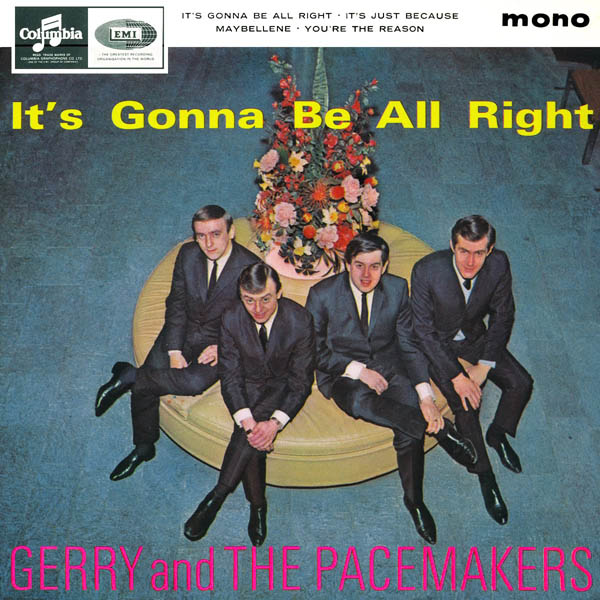
The Mersey Beat - Remembering Gerry & The Pacemakers
Gerry and the Pacemakers were a British Beat Music group prominent during the 1960s. In common with The Beatles, they came from Liverpool, were managed by Brian Epstein and recorded by George Martin. They are most remembered for being the first act to reach number one in the UK singles chart with their first three single releases. It was a record that was not equalled for 20 years, until the mid-80s success of fellow Liverpool band Frankie Goes to Hollywood. According to Billboard Magazine, the group is the second most successful band to originate from Liverpool next to The Beatles.
Gerry Marsden formed the group in 1959 with his brother, Fred, Les Chadwick and Arthur McMahon. They rivalled The Beatles early in their career, playing in the same areas of Hamburg, Germany and Liverpool, England. McMahon (known as Arthur Mack) was replaced on piano by Les Maguire around 1961. They are known to have rehearsed at Cammell Laird shipping yard at Birkenhead. The band's original name was Gerry Marsden and The Mars Bars, but they were forced to change this when the Mars Company, producers of the chocolate Mars Bar, complained.
The band was the second to sign with Brian Epstein, who later signed them with Columbia Records (a sister label to The Beatles' label Parlophone under EMI). They began recording in early 1963 with "How Do You Do It?", a song written by Mitch Murray that Adam Faith had turned down and one that The Beatles chose not to release (they did record the song but insisted on releasing their own song, "Please, Please Me"). The song was produced by George Martin and became a number one hit in the UK, the first by an Epstein Liverpool group to achieve this on all charts, until being replaced at the top by "From me to You", The Beatles' third single.
Gerry and The Pacemakers' next two singles, Murray's "I Like It" and Rodgers and Hammerstein's"Youll Never Walk Alone'", both also reached number one in the UK Singles Chart, the latter recorded instead of The Beatles' "Hello Little Girl", which went on to become the first hit for The Fourmost. "You'll Never Walk Alone" had been a favourite of Gerry Marsden's since seeing Carousel growing up. It soon became the signature tune of Liverpool Football Club. To this day, the song remains a football anthem, there and elsewhere, a phenomenon due to Gerry Marsden, rather than its Broadway composers.

Despite this early success, Gerry and The Pacemakers never had another number one single in the UK. Gerry Marsden began writing most of their own songs, including "It's Gonna Be All Right", "I'm the One", and "Ferry Cross the Mersey", as well as their first and biggest US hit, "Don't Let The Sun Catch You Crying", which peaked at No4, and which Gerry Marsden initially gave to Decca recording artist Louise Cordet in 1963. She recorded the song (Decca F11824), but without commercial success. The song, written by all bandmembers, has also been covered by Les Carle, The Lettermen, Jackie Deshannon) This is Jack DeShannon album, 1965), Jose Feliciano, Dr Jonh, Ricky Lee Jones, Gloria Esterfan(Hold Me, Thrill Me ,Kiss Me album) among others.
They also starred in an early 1965 film called Ferry Cross the Mersey (sometimes referred to as "Gerry and The Pacemakers' version of A Hard Day's Night"), for which Marsden wrote much of the soundttrack. The title song was revived in 1989 as a charity single for an appeal in response to the Hillsborough Football crowd disaster, giving Marsden - in association with other Liverpool stars, including Paul McCartney and Frankie Goes to Hollywood's Holly Johnson - another British number one.
In the US, their recordings were released by the small New York record label Laurie in 1963, with whom they issued four singles during 1963 without success (as listed below). When The Beatles broke through in January 1964, Laurie's next regular single release of "Don't Let The Sun Catch You Crying" became a big hit and during 1964 Laurie coupled "How Do You Do It?" with "You'll Never Walk Alone" (Laurie 3261) and "I Like It" with "Jambalaya" (Laurie 3271) with some success.
By late 1965, their popularity was rapidly declining on both sides of the Atlantic. They disbanded in October 1966,] with much of their latter recorded material never released in the UK. Drummer Freddie Marsden born Fredrick John Marsden, 23 November 1940, at 8 Menzies Street, Toxteth, Liverpool died on 9 December 2006 in Southport, age 66.

In 1963 Gerry Marsden was quoted as saying, "The Beatles and ourselves (The Pacemakers) - we let go when we get on stage. I'm not being detrimental, but in the South, I think the groups have let themselves get a bit too formal. On Merseyside, it's beat, beat, beat all the way. We go on and really have a ball."
Sid on the TV Times (1975)
This classic TV Times cover comes from January 4th-7th 1975 and gracing the cover are Sid James & the Carry On gang. Carry On Laughing appeared for two series on the ITV network this particular year. The series' comprised of 13 half hour segments of compilations from the Carry On series.
By 'eck chuck. It's Elsie on the TV Times (1964)
By 'eck chuck, it's Pat Phoenix as the legendary Elsie Tanner gracing the cover of this edition of the TV Times from way back in 1964.
Sunday, 25 March 2012
Kelloggs Sugar Smacks (1966)
Back to 1966 and the popular breakfast cereal at that time, Sugar Smacks. Coming free in the Sugar Smacks packs were these 3-D cut out models of the classic puppet series, Thunderbirds. To think, these were all the rage back in those days. Whatever would the sophisticated kids of today make of 'em?
Subscribe to:
Posts (Atom)