Sunday, 14 August 2011

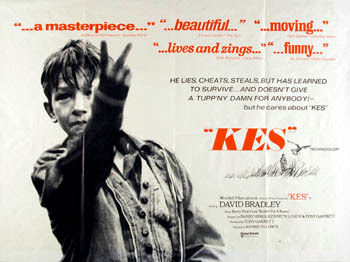
Kes (1969) The Ken Loach Classic

Kes was a 1969 British film from Director Ken Loach and producer Tony Garnett. The film is based on the novel, A Kestrel for a Knave written by the Barnsley-born author Barry Hines in 1968. The film is ranked seventh in the The British Film Institute's Top Ten (British) Films and among the top ten in its lists of the top 50 films you should see by the time you are aged 14.

The film focuses on 15-year-old Billy Casper, who has little hope in life and is bullied both at home, by his physically and verbally abusive half-brother, Judd, as well as at school. He is mischievous himself; he steals milk from milk floats, gets other students into trouble and generally fights and misbehaves. Billy comes over as an emotionally neglected boy with little self-respect. Billy's mother refers to him in the film as a "hopeless case". His father is dead.

The film shows scenes of Billy's school. The headmaster canes a group of boys who were caught smoking. One scene of comic relief in an otherwise bleak film is of a gym teacher (played by Brian Glover) taking part in a football game, fantasising about himself as Bobby Charlton and commentating on the match in his head.

Outside cadging money and day-dreaming at school, Billy has no positive interests. His greatest fear is ending up working down the pit as a coal miner (at that time, British miners were amongst the lowest paid workers in the developed world), but he has no apparent escape route from what would ultimately be his fate. That is until he finds an outlet from his pitiful existence through training a kestrel that he takes from a nest on a farm. His interest in learning falconry prompts Billy to steal a book on the subject from a secondhand book shop as he cannot get a borrower's card for the public library.

As the relationship between Billy and "Kes", the kestrel, during the training improves so does Billy's outlook and horizons. For the first time in the film Billy receives praise, from his English teacher after delivering an impromptu talk on his relationship with the bird.

However, when Judd sends Billy off to place a bet on a horse, Billy spends the money on chips, as he assumes the horse is unlikely to win. However, the horse wins (meaning Judd would have won over £10 if Billy had put the bet on), and Judd is furious at Billy, and takes revenge by killing his kestrel because he could not find Billy. Judd confronts his mother and Billy finds his kestrel, who is now dead. Billy shows his kestrel to Judd and his mother, leaving Judd angry at him, but Billy leaves to stop the confrontation. He buries his kestrel in the same garden he found the bird.

Kes was Ken Loach's second feature film, and marks his move away from the self-conscious experimentalism of his earlier work.

As before, Loach developed a close partnership with the author of the source work, in this case Barry Hines, on whose novel A Kestrel for a Knave the film is based. Loach worked with both Hines and producer Tony Garnett to adapt it as a film script.

The dominant theme of Kes is the way in which the education system stifles the talents of many young working-class children, offering them little choice but to follow the narrow path laid out for them by an industrial capitalist society which sees them as fit only for unskilled manual or office work. This theme runs through much of Loach's work.

The influence of Italian neo-realism film-making can be traced in Kes, as in Poor Cow (1967). Loach explained, "the camera's job was to record in a sympathetic way and to be unobtrusive, not to be slick." Loach and his cameraman Chris Menges didn't, as is common in fiction films, mark spots for the actors to hit, but instead tried to accommodate the actors' movements. Loach, though, has admitted that throughout his films, including Kes, "I lay traps, as it were," for example by moving furniture. The apparent simplicity and directness of Loach's filming thus contains an element of manipulation which is hidden from both the audience and the actors.
Casting is also a striking feature of Kes. Colin Welland, as the English teacher, Farthing, was the only professional actor in the cast, although several, notably Brian Glover as the bullying Games teacher, went on to acting careers. All of the pupils, including Dai Bradley, who gives a remarkably natural performance as Billy, came from the Barnsley school in which the film was shot, while the headmaster was played by the school's own head. As with several Loach films, many of the adult cast were found in local clubs where they worked as entertainers and comics. Loach has commented that he casts for "authenticity of age, class or region," believing that even skilled actors cannot disguise their class origins under the close scrutiny of the camera.
Initially, there were difficulties in getting Kes shown, and it had a patchy release after opening in Doncaster. Since then, however, it has become one of Loach's best known and admired films.

Kes
Kes - 27 x 40 Movie Poster - Style B
Directed byKen Loach
Produced byTony Garnett
Screenplay byBarry Hines
Ken Loach
Tony Garnett
Based onA Kestrel for a Knave by
Barry Hines
StarringDavid Bradley
Freddie Fletcher
Lynne Perrie
Colin Welland
Brian Glover
Music By
John Cameron
CinematographyChris Menges
Editing byRoy Watts
Distributed byUnited Artists
Release date(s)1969
Running time110 minutes
CountryUnited Kingdom
LanguageEnglish

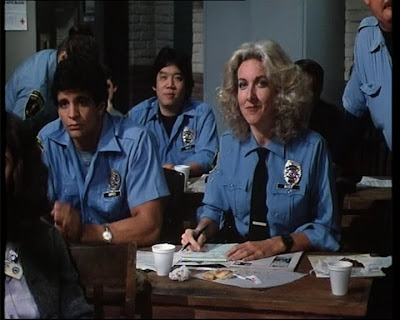
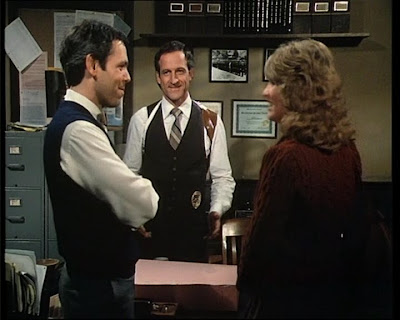
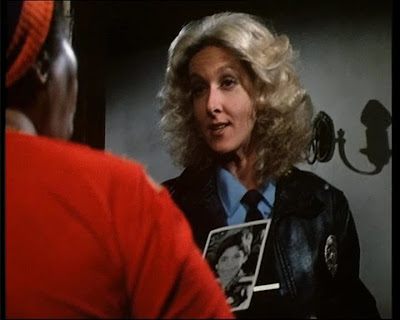
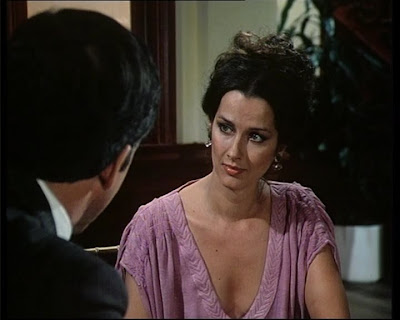
Hill Street Blues - Series Two - Episode One (Hearts and Minds)


The second season gets off to an explosive start when a domestic situation turns violent in the squad room. Furillo is skeptical of an ex-Black Arrow gang leader, Jesse John Hudson, who returns to the Hill as a social reformer.
Belker makes contact with a rookie undercover officer planted inside the Black Arrows who tells a much different story than Hudson. The cops' skeptism is increased when two rival warlords of the gang turn up dead.
Calletano and Goldblume search for a missing boy. Fay descends on the Hill with a birthday cake for Furillo, who turns 40. Joyce represents a topless waitress who accuses a detective of blackmailing her for sex. Belker nabs a purse-snatching orangutan. Esterhaus questions his involvement with Grace. Frank and Joyce split up after he demands their relationship move forward.

The Carry On Legacy - Carry on Doctor: (1968)

Carry On Doctor (1968) was the fifteenth film in the Carry On series. It is the second in the series to have a medical theme. Frankie Howerd makes the first of his two appearances in the film series. He stars alongside regulars, Sid James, Kenneth Williams, Charles Hawtrey, Joan Sims and Bernard Bresslaw. Hattie Jacques returns for the first time since Carry On Cabby four years earlier, while Barbara Windsor returns after her debut in Carry On Spying three years earlier. Carry On Doctor marked Anita Harris's second and final appearance in the series.

Francis Bigger (Frankie Howerd) is a charlatan faith healer, convinced that "mind over matter" is more effective than medical treatment. During a lecture, he stumbles offstage and is admitted to the local hospital.

In hospital he incessantly groans and whinges about being "maltreated" and demands better treatment than the other, increasingly bizarre patients: bedridden layabout Charlie Roper (Sid James) who shams illnesses to stay in hospital; Ken Biddle (Bernard Bresslaw) who makes frequent trips to the ladies' ward to flirt with his love interest, Mavis Winkle (Dilyhs Laye); and Mr Barron (Charles Hawtrey) who seems to be suffering sympathy pains whilst his wife awaits the birth of their baby. He also meets two very different doctors. Clumsy yet charming Dr. Kilmore (Jim Dale) is popular with the patients and loved from afar by the beautiful Nurse Clark (Anita Harris); hospital registrar Dr. Tinkle is universally detested, as is his battleaxe Matron (Hattie Jacques), who harbours an unrequited love for him.

After Bigger's arrival, novice nurse Sandra May (Barbara Windsor), arrives at the hospital with her intention to declare her (questionable) love for Tinkle, and enters his room, violating hospital rules that female staff are not permitted in the male quarters. Matron and Kilmore burst in on her declarations of love, which are cruelly rebuffed by Tinkle. Matron throws Nurse May out, and she leaves whilst tearfully announcing she'd rather die than live without Tinkle. Dr. Tinkle fears for his position after this incident, and contrives with Matron to get rid of Kilmore and Sandra May, lest they reveal the truth.

Shortly after, Sandra May climbs on to the roof of the nurses' home to sunbathe in her bikini top. Dr. Kilmore and Nurse Clark assume she is going to throw herself off the roof in despair after Tinkle's rejection. Kilmore rushes to save her and climbs on to the roof. He realises she is sunbathing and prepares to leave, but Sandra assumes to her horror he is leering over her, and shrieks in fear. Her screams attract attention and soon the entire hospital staff and townspeople flock to watch. Nurse Clark attempts to help Kilmore before he falls to his death, but he accidentally tears her skirt off, leaving her in her underwear and stockings. Kilmore crashes through a window to safety, but lands in a bath... with a nurse in it, who assumes he is attacking her. His good reputation is destroyed amongst everyone except his patients.

Dr. Kilmore is given a hearing with the hospital governor, but Matron and Tinkle deny his revelation of Sandra May's fight with Tinkle. As Sandra May has left the hospital, Kilmore has no proof to support him and is forced to resign. Nurse Clark reports the Tinkle and Matron's treachery to the patients, and together they decide to exact revenge upon the doctor and Matron for what they have done.
Carry On Doctor was made at a time of transition for producer Peter Rogers. After making twelve Carry On films for Anglo-Amalgamated, he had taken the series to Rank, but had been unable to retain the Carry On prefix. This led to the release of Don't Lose Your Head (d. Gerald Thomas, 1966) and Follow that Camel (d. Gerald Thomas, 1967), Carry On films in all but name, but which saw a considerable drop in box office revenue.
Faced with the prospect of the end of the series, he returned to the tried and tested formula of one of the series' first hits, Carry On Nurse (d. Gerald Thomas, 1959). Frankie Howerd, in one of the few in-jokes of the series, refers to its notorious daffodil joke when approached by a nurse holding a flower ("Oh no you don't - I saw that film!"). Playing a demanding patient, Howerd fulfils the same role played by Wilfrid Hyde-White in the earlier film, while Hattie Jacques returns as the overpowering Matron, both films climaxing with the patients taking over the operating theatre. Inspiration also came from Rank's popular Doctor films - which were produced by Rogers' wife Betty Box and directed by Gerald Thomas' brother Ralph - with a portrait of its mainstay James Robertson Justice plainly visible in hospital foyer. By the time the film was released, an agreement was reached for the continued use of the series name and it was subsequently added to the two made without it.
THE

MONTHLY FILM BULLETIN

Published by

THE BRITISH FILM INSTITUTE

Volume 35, No.411, April 1968, page 58

CARRY ON DOCTOR (1968)

Francis Bigger is a charlatan who tours the country lecturing on the subject of mind over matter accompanied by his faithful, deaf assistant Chloe Gibson. During one of his lectures he falls off the platform and is taken to the local hospital where he misinterprets a conversation between Chloe and the registrar, Dr. Tinkle, and believes that he has only a week to live. Stricken with conscience at the way he has mistreated Chloe, he decides to marry her and arranges for the wedding ceremony to be held in the hospital. Meanwhile, drama is developing beneath the placid surface of hospital life: Tinkle is caught by young Dr. Kilmore in his room with bosomy nurse Sandra May; and Matron, who nurses a passion for Tinkle under her formidable exterior, seizes her chance by conniving at Tinkle's indiscretion and helping him to frame Kilmore, who faces dismissal. Kilmore accepts his fate philosophically, but Nurse Clarke is so upset that a group of male patients, who include Charlie Roper, Ken Biddle, Mr. Barron and Mr. Smith, decide to take action. Taking Tinkle prisoner, they force him to sign a confession of his misdeeds, while in another ward the women patients deal similarly with Matron. Kilmore is rein-stated and made Tinkle's superior. Meanwhile Bigger has discovered his mistake and is aghast at the prospect of life with the now domineering Chloe; but another back injury returns him to the peace of the hospital ward.

Described (appropriately) as a "bedpanorama of hospital life", this new Carry On looks back to the Doctor series in that the farce is rather less grotesque than of late and much of the material is in light comedy vein. In all other respects, though, it is the story as before. The plot is no more than a mess of inane sketches involving the misfortunes of hospital patients and staff, punctuated by a string of tasteless jokes about castor oil, bedpans and parts of the anatomy. Frankie Howerd joins the regulars and seems quite at home.


The Monthly Film Bulletin was published by the British Film Institute between 1934 and 1991. Initially aimed at distributors and exhibitors as well as filmgoers, it carried reviews and details of all UK film releases. In 1991, the Bulletin was absorbed by Sight and Sound magazine.

Carry On Doctor

Carry On Doctor - 11 x 17 Movie Poster - Style A
Directed byGerald Thomas
Produced byPeter Rogers
Written byTalbot Rothwell
Narrated byPatrick Allen
StarringFrankie Howerd
Sid James
Kenneth Williams
Charles Hawtrey
Jim Dale
Barbara Windsor
Hattie Jacques
Joan Sims
Anita Harris
Bernard Bresslaw
Music byEric Rogers
CinematographyAlan Hume
Editing byAlfred Roome
Distributed byThe Rank Organisation
Release date(s)December 1967
Running time94 minutes
CountryUnited Kingdom
LanguageEnglish
Budget£214,000

Saturday, 13 August 2011

Sing Lofty (1976)

Windsor Davies And Don Estelle - Sing Lofty
Don Estelle & Windsor Davies were best known in the 1970s for their performance in the classic sitcom, "It Ain't Half Hot Mum." The duo also enjoyed a brief pop career with a top ten hit back in 1975 with, "Whispering Grass." This particular album from the duo released in 1976 reached its highest spot of No 10 at the end of January 1976 and spent 8 weeks in the charts.
Windsor Davies And Don Estelle - Whispering Grass
Whispering Grass reached No 1 in the charts back in 1975 and spent 12 weeks in the charts.

Doctor Who and the Radio Times!

It's time once again to pay homage to the good old Radio Times and its long association with Doctor Who.

The page above is from an edition back in 1977: The page below is from 1983.

The page below is from an edition back in 1967.
The page above is taken from a 1970 edition.

The front cover of the 20th Anniversary edition.

Man about the House (1973)

Man About the House (UK) tv show photo
Man About the House was a British sitcom that starred Richard O'Sullivan, Paula Wilcox and Sally Thomsett that was broadcast for six seasons on ITV from 1973 to 1976. It was created and written by Johnnie Mortimer and Brian Cooke. The series was considered daring at the time due to its subject matter of a man sharing a flat with two single girls. It was made by Thames Television, and two spin-offs were later made: George & Mildred and Robin's Nest. In 2004, it came 69th in a poll to find Britain's Best sitcom. The series was remade in the United States as, Three's Company in 1977. A film version of Man About the House was released in 1974.

Young flatmates Chrissy and Jo find a stranger, student Chef Robin Tripp, asleep in their bath the morning after the farewell party for their departed flatmate Eleanor. They are taken by Robin, and are especially impressed by his culinary skills at breakfast. Neither Chrissy or Jo can cook, and "Eleanor didn't leave the recipe for toast."

Chrissy and Jo are both from regional England and moved out on their own to live in London. They both work for the same firm. When he meets the girls Robin has been in London two days, having moved from his home town of Southampton to attend college.

The girls are unimpressed with Gabby (Helen Fraser), a pushy young woman who arrives hoping to move in to Eleanor's room. Learning that Robin has been staying at the YMCA they easily convince him to move in.

Robin moves in on a platonic basis, and Chrissy tells the Landlord, George Roper that Robin is gay to pre-empt objections to the mixed-sex living arrangement. In the second episode Robin's true sexuality becomes known to Mildred. Mildred openly flirts with Robin at every opportunity.

Robin frequently acts in a flirtatious manner toward Chrissy and Jo. The women have no romantic interest and spurn his mild advances, and quickly adapt to his presence in the flat.

Landlord George Roper, in truth a sub-letting landlord placed by the council, is a bumbling, accident-prone and gullible man under the thumb of his domineering and sexually-frustrated wife Mildred. Mildred takes out her frustrations with George's lack of class and sexual inadequacy by making suggestive remarks to Robin and frequently siding with the tenants against George. Yet for all their battles the Ropers are a devoted couple.

Robin's friend Larry, a lovable rogue, appears in two first season episodes. In the second season he moves into the loft apartment and is a frequent source of trouble. Another occasional cast member is George's friend, dim schemer Jerry.

Robin's brother Norman Tripp (Norman Eshley) appears through the final season, and starts a romance with Chrissy. Norman Eshley had a previous guest role in the series two years earlier playing a different character, and was also a member of the main cast of the spin-off series, George and Mildred in which he played The Ropers' snobbish neighbour Jeffrey Fourmile.


Gloria Gaynor - I Will Survive

Gloria Gaynor,I Will Survive,UK,CD ALBUM,466957
Gloria Gaynor - I Will Survive the 2009 issue UK 12-track CD album - If ever a song title was prophetic in terms of an artist's career, then surely 'I Will Survive' is a prime example of a title becoming a self-fulfilling prophecy when one discusses the career of Gloria Gaynor. However, let's not forget that the hit which kicked it all off for Gloria and effectively started the Disco boom was her dance-floor friendly version of the Jackson Five's 'Never Can Say Goodbye'. Following her first two albums for MGM and her subsequent seven album releases for Polydor, Gloria switched labels and recorded an album of brand new material [apart from the 2 hits] for French label Ecstasy which signaled a change in direction with Gloria moving from the more Disco orientated material towards a more Pop and R'n'B sensibility. This is that album with the additions of 2 Bonus Remixes of 'I Will Survive'.)

Loneliness of the Long Distance Runner (1962)

Tony Richardson's film of Alan Sillitoe's short story intersperses Colin's (Tom Courtenay) life in borstal, where he is encouraged by the Governor to take up running, with flashbacks to the months leading up to his arrest.

The Loneliness of the Long Distance Runner was released in 1962, quite late in the new wave cycle. In his memoirs Richardson describes shooting as "a lovefest... I felt free and happy making a film for the first time without constraints."

By contrast with the theatrical basis of Richardson's earlier films Look Back in Anger (1959) and The Entertainer (1960), the camera is very evident. The 'poetic realist' approach dominates - Colin's runs are shot in an impressionist style and there is an experimental approach to sound, for instance in a scene in which the boys riot in the canteen. Instead of being portrayed naturalistically, everyday scenes are shot in a heightened way reflecting Colin's state of mind and his view of authority.

The film faced more unfavourable criticism at the time than many of the new wave films. Critics noted the influence of the French New Wave, especially François Truffaut. The stylistic devices were considered too gimmicky and derivative and the anti-authoritarianism denounced as crude. There is certainly a lack of subtlety in some scenes but they can still prove effective, for example the beating of Stacey as the boys sing 'Jerusalem'.
Even hostile critics, however, praised the intensity of Tom Courtenay's performance as Colin. Himself rom a working-class background, Courtenay is convincing and charismatic as the rebel determined to outwit the system. Colin refuses to conform to be a victim, thug or dupe of authority. By stopping in front of the finishing line, he proves his talent, but denies the Governor the credit.
The film is very much of its time, in context and style. Like the other new wave films it shows a British working class with money for the first time but still without power or prospects. Stylistically perhaps its time has come round again - the fast pace and mixing of styles seems fashionable once more.

THE

MONTHLY FILM BULLETIN

Published by

THE BRITISH FILM INSTITUTE

Volume 29, No.346, November 1962, page 148

LONELINESS OF THE LONG DISTANCE RUNNER, THE (1962)

Colin Smith is sent to Ruxton Towers, a stately home which has been turned into a Borstal institution. Son of a £9 a week factory worker who died of cancer, Colin is by nature a rebel, an anarchist. His mother splashes the £500 employer's compensation for his father's death on a new carpet and a "telly", then takes up with a fancy man whom Colin loathes. A weekend spent with his friend Mike and a couple of girls at Skegness ends in frayed tempers and a dispiriting return; the exhilaration of the robbery, carried out with Mike's help; the bullying police enquiries and arrest. Colin feels no guilt at finding himself in Borstal, only contempt for Society - an inimical image most strongly embodied for him in the bland, well-meaning presence of the Borstal Governor. The one thing Colin does well is run, and the Governor trains him to win the first long-distance cross-country race ever arranged between the institution and a team of amiable young men from a neighbouring public school. But the Governor's obsessive faith in Colin urges the boy to set up a record not in running but in sheer, basic bloody-mindedness. He runs his rival into the ground then, within striking distance of the tape, stops dead. His victory solitary but sweet, he is sent back to his old, useless job in the workshops, stripping down gas-masks.

Fashionableness can be a fickle, limiting thing for an artist, and needs considerable personal style if his efforts are not only to persuade for the moment but to endure. Tony Richardson's expansion, via the author's own screenplay, of Sillitoe's wiry but tenuous short story is very fashionable indeed. Its protagonist is young, disingenuous, a social outlaw; his environment a mixture of grimy restriction and tantalising, lyrical glimpses of freedom; his gesture of unrelenting war a terse, deliberate refusal to accept Society's conditional offer of integration and the big Step Up - win a race like any self-respecting public school boy; take your chance of fame in the Olympic Games. Richardson, the producer and director, makes his point clearly enough, but at quite a price: bias trailing off into parody, forcefulness impaired by stylistic inconsistency, a dispiriting familiarity of approach.

First, there are the flashbacks, accounting for Colin's present predicament at a length (about half the running time?) in no way justified by their content, which adds up to nothing we haven't seen time and time again in the recent past, or by their uninteresting and laboured presentation (the spending spree done after the style of a TV shopping gazette). The script as a whole has that bitty, desultory, involved construction which is the bane of so much British screenwriting, old and new; every attempt to hide the fact that a tiny anecdote is being spun out leads to the most reactionary longing on the part of the viewer for some solid, dramatic meat of the most old-fashioned kind. Just as fussy are the devices tagged on to some otherwise attractive running scenes - water-reflected shots, upside-down shots, whirling tree-top shots, and the self-indulgent barrage of "thought stream" cut-ins from previous flashbacks during the actual race, a sequence simply crying out for clarity.

The lack of confidence behind this restless tricksiness extends to all sorts of other things. The riot, for instance, is shot in fast, lateral tracking movements back and forth, indicative less of trapped rage on the screen than of panic behind the view-finder. The photographic texture keeps switching from the grainy, pseudo-documentary to the intrusively pretty (much of the open air material). It seems significant that Lassally's camerawork is most effective at its closest and most straightforward, moving in on a fight or observing the subtle irritations of Redgrave's Governor in the face of the inanities of a psychiatrist-housemaster. The sound-track not only plugs ironies like the gap between boys singing Jerusalem and one of their number being chased, caught and probably beaten up; it goes in, in a studied, academic way, for such recently popular devices, à la Saturday Night and Sunday Morning as dialogue preceding image. When these devices step outside the realm of British "new wave" film-making into what can only be described as cribs (though doubtless an homage was intended) from Truffaut's Quatre Cent Coups, one's doubts as to the course Richardson's style is taking reach disquieting proportions. Speeded-up movement, jump-cuts, bits of business with a hat and a typewriter, the interview with the psychiatrist, even if such borrowings were justifiable they would still have to work in themselves in a way they certainly don't here. And, anyway, where is Richardson's own style?

Against this, and a great deal of childishly unacceptable caricature (the concert artists, the pompous TV Tory, elements in Redgrave's sometimes perceptively underplayed Governor), must be set several excellent performances - James Bolam as the friend, almost all the boys (surprisingly enough the public school types are absolutely believable, done with untypical generosity) and Tom Courtenay as Colin. Courtenay displays a surly iconoclasm tempered with humour and intelligence that preserves a much-needed equilibrium between the viewer's sympathy and his natural impatience. His portrait of a sturdy recalcitrance channelled by depressingly unhealthy, hopeless circumstances into something genuinely tragic is exactly right. He persuades, in fact, where the film doesn't. Still, one looks forward to Richardson's next, Tom Jones, with undiminished interest and curiosity.


The Monthly Film Bulletin was published by the British Film Institute between 1934 and 1991. Initially aimed at distributors and exhibitors as well as filmgoers, it carried reviews and details of all UK film releases. In 1991, the Bulletin was absorbed by Sight and Sound magazine.

The Loneliness of the Long Distance Runner

The Loneliness of the Long Distance Runner - 11 x 17 Movie Poster - Style A

Directed byTony Richardson
Written byAlan Sillitoe
StarringTom Courtenay
Michael Redgrave
James Bolam
Ray Austin
John Thaw
Alec McCowen
Editing byAnthony Gibbs
StudioWoodfall Film Productions
Distributed byContinental
Release date(s)1962
Running time104 min
LanguageEnglish