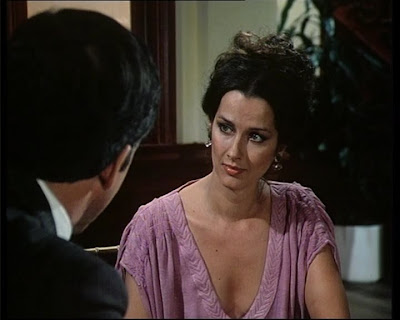
Carry On Doctor (1968) was the fifteenth film in the Carry On series. It is the second in the series to have a medical theme. Frankie Howerd makes the first of his two appearances in the film series. He stars alongside regulars, Sid James, Kenneth Williams, Charles Hawtrey, Joan Sims and Bernard Bresslaw. Hattie Jacques returns for the first time since Carry On Cabby four years earlier, while Barbara Windsor returns after her debut in Carry On Spying three years earlier. Carry On Doctor marked Anita Harris's second and final appearance in the series.

Francis Bigger (Frankie Howerd) is a charlatan faith healer, convinced that "mind over matter" is more effective than medical treatment. During a lecture, he stumbles offstage and is admitted to the local hospital.
In hospital he incessantly groans and whinges about being "maltreated" and demands better treatment than the other, increasingly bizarre patients: bedridden layabout Charlie Roper (Sid James) who shams illnesses to stay in hospital; Ken Biddle (Bernard Bresslaw) who makes frequent trips to the ladies' ward to flirt with his love interest, Mavis Winkle (Dilyhs Laye); and Mr Barron (Charles Hawtrey) who seems to be suffering sympathy pains whilst his wife awaits the birth of their baby. He also meets two very different doctors. Clumsy yet charming Dr. Kilmore (Jim Dale) is popular with the patients and loved from afar by the beautiful Nurse Clark (Anita Harris); hospital registrar Dr. Tinkle is universally detested, as is his battleaxe Matron (Hattie Jacques), who harbours an unrequited love for him.


After Bigger's arrival, novice nurse Sandra May (Barbara Windsor), arrives at the hospital with her intention to declare her (questionable) love for Tinkle, and enters his room, violating hospital rules that female staff are not permitted in the male quarters. Matron and Kilmore burst in on her declarations of love, which are cruelly rebuffed by Tinkle. Matron throws Nurse May out, and she leaves whilst tearfully announcing she'd rather die than live without Tinkle. Dr. Tinkle fears for his position after this incident, and contrives with Matron to get rid of Kilmore and Sandra May, lest they reveal the truth.

Shortly after, Sandra May climbs on to the roof of the nurses' home to sunbathe in her bikini top. Dr. Kilmore and Nurse Clark assume she is going to throw herself off the roof in despair after Tinkle's rejection. Kilmore rushes to save her and climbs on to the roof. He realises she is sunbathing and prepares to leave, but Sandra assumes to her horror he is leering over her, and shrieks in fear. Her screams attract attention and soon the entire hospital staff and townspeople flock to watch. Nurse Clark attempts to help Kilmore before he falls to his death, but he accidentally tears her skirt off, leaving her in her underwear and stockings. Kilmore crashes through a window to safety, but lands in a bath... with a nurse in it, who assumes he is attacking her. His good reputation is destroyed amongst everyone except his patients.

Dr. Kilmore is given a hearing with the hospital governor, but Matron and Tinkle deny his revelation of Sandra May's fight with Tinkle. As Sandra May has left the hospital, Kilmore has no proof to support him and is forced to resign. Nurse Clark reports the Tinkle and Matron's treachery to the patients, and together they decide to exact revenge upon the doctor and Matron for what they have done.

Carry On Doctor was made at a time of transition for producer Peter Rogers. After making twelve Carry On films for Anglo-Amalgamated, he had taken the series to Rank, but had been unable to retain the Carry On prefix. This led to the release of Don't Lose Your Head (d. Gerald Thomas, 1966) and Follow that Camel (d. Gerald Thomas, 1967), Carry On films in all but name, but which saw a considerable drop in box office revenue.

Faced with the prospect of the end of the series, he returned to the tried and tested formula of one of the series' first hits, Carry On Nurse (d. Gerald Thomas, 1959). Frankie Howerd, in one of the few in-jokes of the series, refers to its notorious daffodil joke when approached by a nurse holding a flower ("Oh no you don't - I saw that film!"). Playing a demanding patient, Howerd fulfils the same role played by Wilfrid Hyde-White in the earlier film, while Hattie Jacques returns as the overpowering Matron, both films climaxing with the patients taking over the operating theatre. Inspiration also came from Rank's popular Doctor films - which were produced by Rogers' wife Betty Box and directed by Gerald Thomas' brother Ralph - with a portrait of its mainstay James Robertson Justice plainly visible in hospital foyer. By the time the film was released, an agreement was reached for the continued use of the series name and it was subsequently added to the two made without it.


THE
MONTHLY FILM BULLETIN
Published by
THE BRITISH FILM INSTITUTE
Volume 35, No.411, April 1968, page 58
CARRY ON DOCTOR (1968)
Francis Bigger is a charlatan who tours the country lecturing on the subject of mind over matter accompanied by his faithful, deaf assistant Chloe Gibson. During one of his lectures he falls off the platform and is taken to the local hospital where he misinterprets a conversation between Chloe and the registrar, Dr. Tinkle, and believes that he has only a week to live. Stricken with conscience at the way he has mistreated Chloe, he decides to marry her and arranges for the wedding ceremony to be held in the hospital. Meanwhile, drama is developing beneath the placid surface of hospital life: Tinkle is caught by young Dr. Kilmore in his room with bosomy nurse Sandra May; and Matron, who nurses a passion for Tinkle under her formidable exterior, seizes her chance by conniving at Tinkle's indiscretion and helping him to frame Kilmore, who faces dismissal. Kilmore accepts his fate philosophically, but Nurse Clarke is so upset that a group of male patients, who include Charlie Roper, Ken Biddle, Mr. Barron and Mr. Smith, decide to take action. Taking Tinkle prisoner, they force him to sign a confession of his misdeeds, while in another ward the women patients deal similarly with Matron. Kilmore is rein-stated and made Tinkle's superior. Meanwhile Bigger has discovered his mistake and is aghast at the prospect of life with the now domineering Chloe; but another back injury returns him to the peace of the hospital ward.
Described (appropriately) as a "bedpanorama of hospital life", this new Carry On looks back to the Doctor series in that the farce is rather less grotesque than of late and much of the material is in light comedy vein. In all other respects, though, it is the story as before. The plot is no more than a mess of inane sketches involving the misfortunes of hospital patients and staff, punctuated by a string of tasteless jokes about castor oil, bedpans and parts of the anatomy. Frankie Howerd joins the regulars and seems quite at home.
The Monthly Film Bulletin was published by the British Film Institute between 1934 and 1991. Initially aimed at distributors and exhibitors as well as filmgoers, it carried reviews and details of all UK film releases. In 1991, the Bulletin was absorbed by Sight and Sound magazine.
Carry On Doctor
 |
|---|
| Directed by | Gerald Thomas |
|---|
| Produced by | Peter Rogers |
|---|
| Written by | Talbot Rothwell |
|---|
| Narrated by | Patrick Allen |
|---|
| Starring | Frankie Howerd
Sid James
Kenneth Williams
Charles Hawtrey
Jim Dale
Barbara Windsor
Hattie Jacques
Joan Sims
Anita Harris
Bernard Bresslaw |
|---|
| Music by | Eric Rogers |
|---|
| Cinematography | Alan Hume |
|---|
| Editing by | Alfred Roome |
|---|
| Distributed by | The Rank Organisation |
|---|
| Release date(s) | December 1967 |
|---|
| Running time | 94 minutes |
|---|
| Country | United Kingdom |
|---|
| Language | English |
|---|
| Budget | £214,000 |
|---|